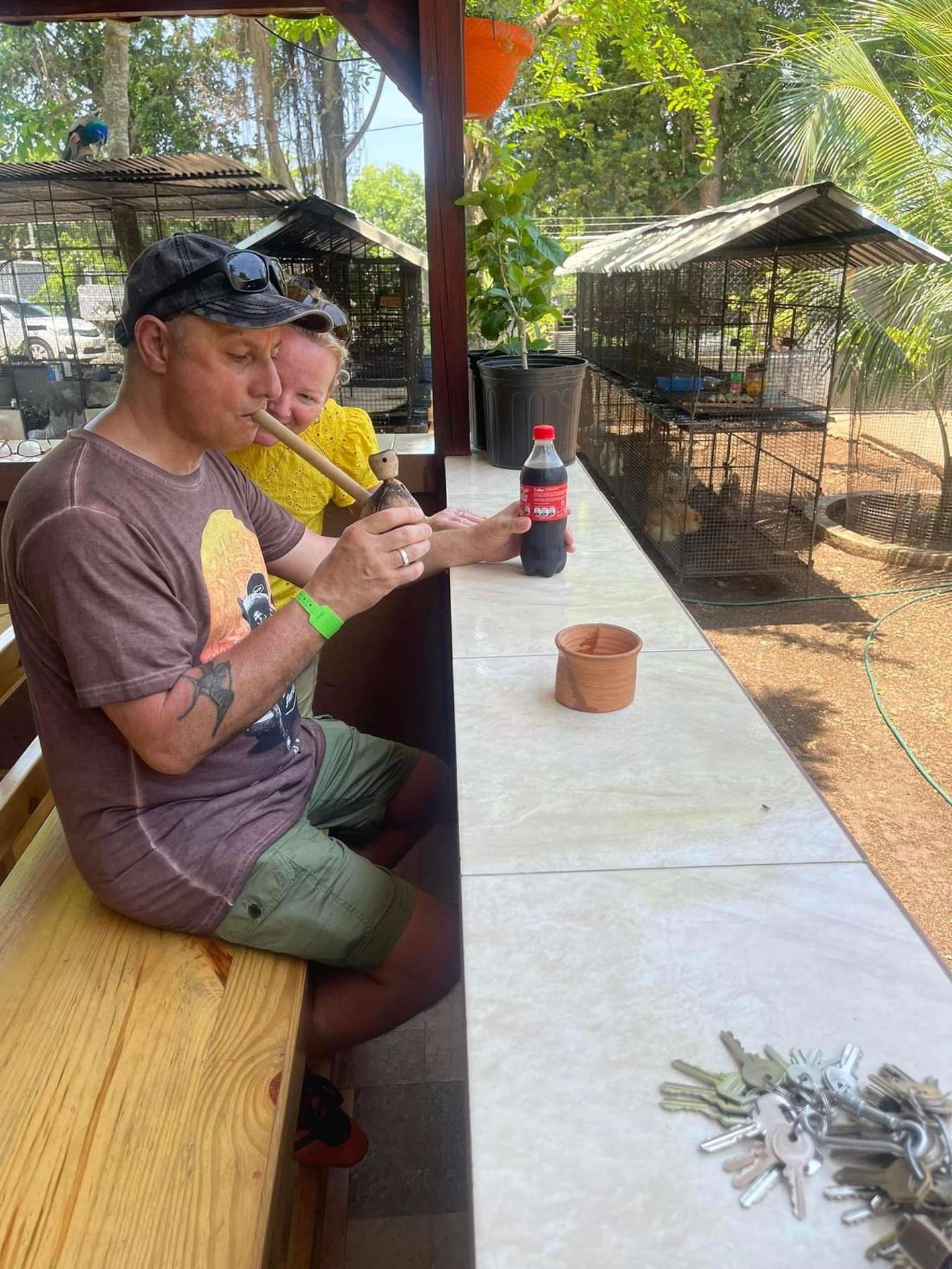
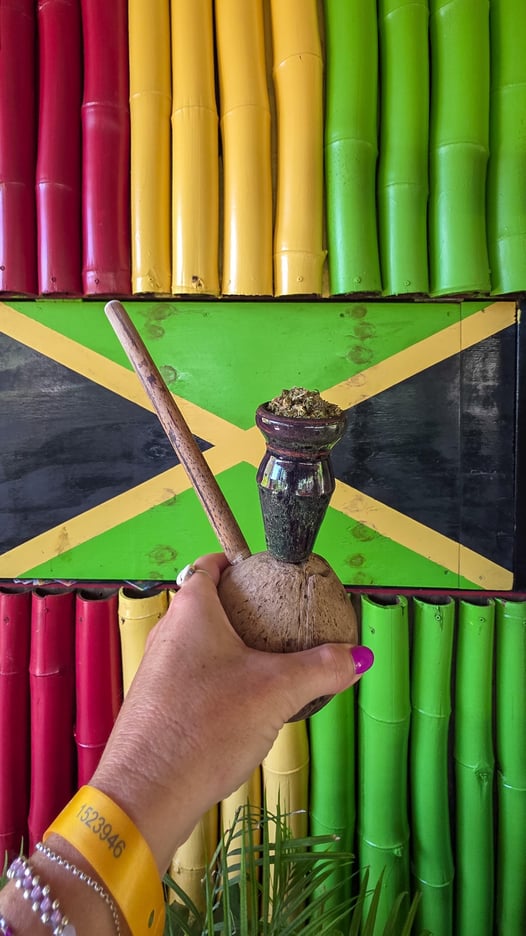
4.6190 walked the rows and smoked the coconut chalice
Weed Farm Tour Jamaica vs Thailand: Which Country Offers the Better Experience
See the plants growing in the field, ask the growers your questions, and decide between Jamaica's sun-grown hillside herb and Chiang Mai's licensed greenhouses. Guided weed farm tours with hotel transfers, entry fees and combos that pair the farm with rafting, mineral springs or a Thai cooking class. Compare both countries, pick your tour, and book in minutes.
"Worked for both of us since I smoke and my partner doesn't. Great vibe the whole time. Our driver was solid too, even grabbed food with us after, which was a nice bonus."
4.6★average rating190traveler reviews100%free cancellation20countries travelers came from
Choosing your weed farm tour - start here
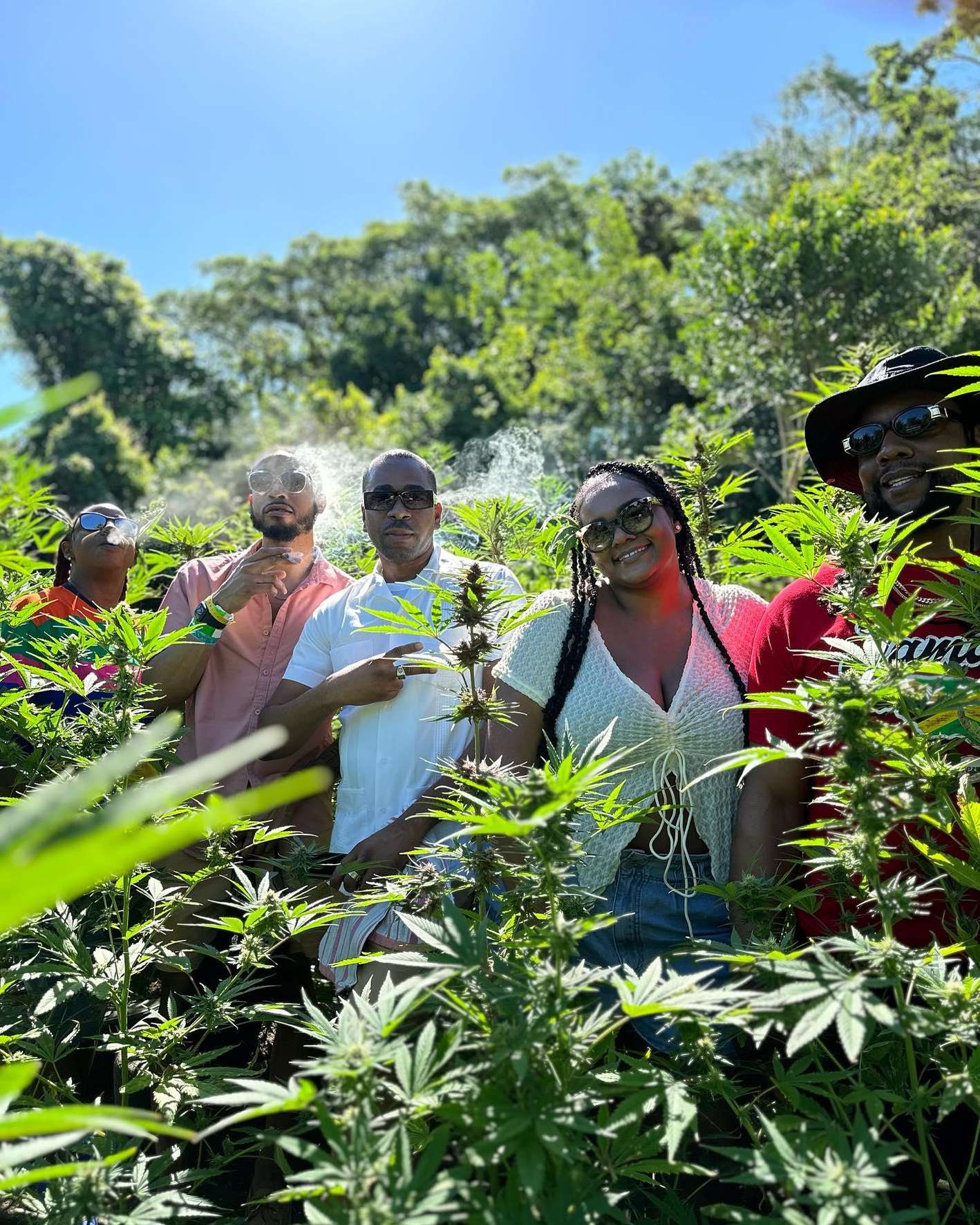
The farm visits here split into two styles. Jamaica runs short, open-air field walks on hillside soil, often paired with a river, a spring or a sanctuary. Chiang Mai runs guided educational walks through licensed greenhouse farms, some paired with a cooking class. The deciding difference is participation: Jamaican tours let you touch plants and sample herb, Thai tours stay strictly look-and-learn.
Age limitsJamaica's farms admit adults 18 and over, Chiang Mai's licensed farms require 20 and over, and nobody under 20 joins a Thai tour even without consuming.
IDBring photo identification such as a passport, because farms may check it at the gate before entry.
Booking aheadReserve a few days ahead and expect your exact pickup time to arrive by message the evening before, typically between 8:30 am and 9:30 am.
Getting thereRound-trip hotel transfers from central areas are the norm on these tours, which matters since rural hill roads are winding and ride-hailing fades fast outside town.
SeasonJamaica's hurricane season runs June through November and heavy storms can wash out mountain roads, so operators may cancel and reschedule without penalty.
What to wearClosed-toe shoes with grip, long trousers and darker clothes you don't mind staining, because wet red soil and muddy field paths ruin sandals and white sneakers.
No samples in ThailandChiang Mai farm tours include no cannabis products at all, and no consumption or distribution happens on site, so treat the visit as education only.
CashCarry physical cash for Jamaican farms, as small hill operations rarely take cards for direct purchases.
Export ruleCannabis cannot legally leave Jamaica or Thailand in any form, so nothing bought at a farm goes in your luggage.
Which weed farm tour fits your trip?
Answer a few quick questions and we'll point you to the right farm day.
1Who's coming?
2What's your budget?
3What kind of trip?
Your best match
match
Montego Bay: Private Marijuana Farm Tour with Nursery Visit★ 3.7 (101) · 3 hours · Nursery visit
Popular with couples on a private outing. It runs just for your group, nursery and all.
A private nursery visit where you touch and smell the plants, from Montego Bay.
What your day tour of a Montego Bay weed farm covers
about 1 h
A licensed cannabis farm outside Montego Bay opens its gates for a private guided visit, with hotel pickup and entry fees already covered. The whole thing runs one to two hours, so it fits easily into a morning before the beach.
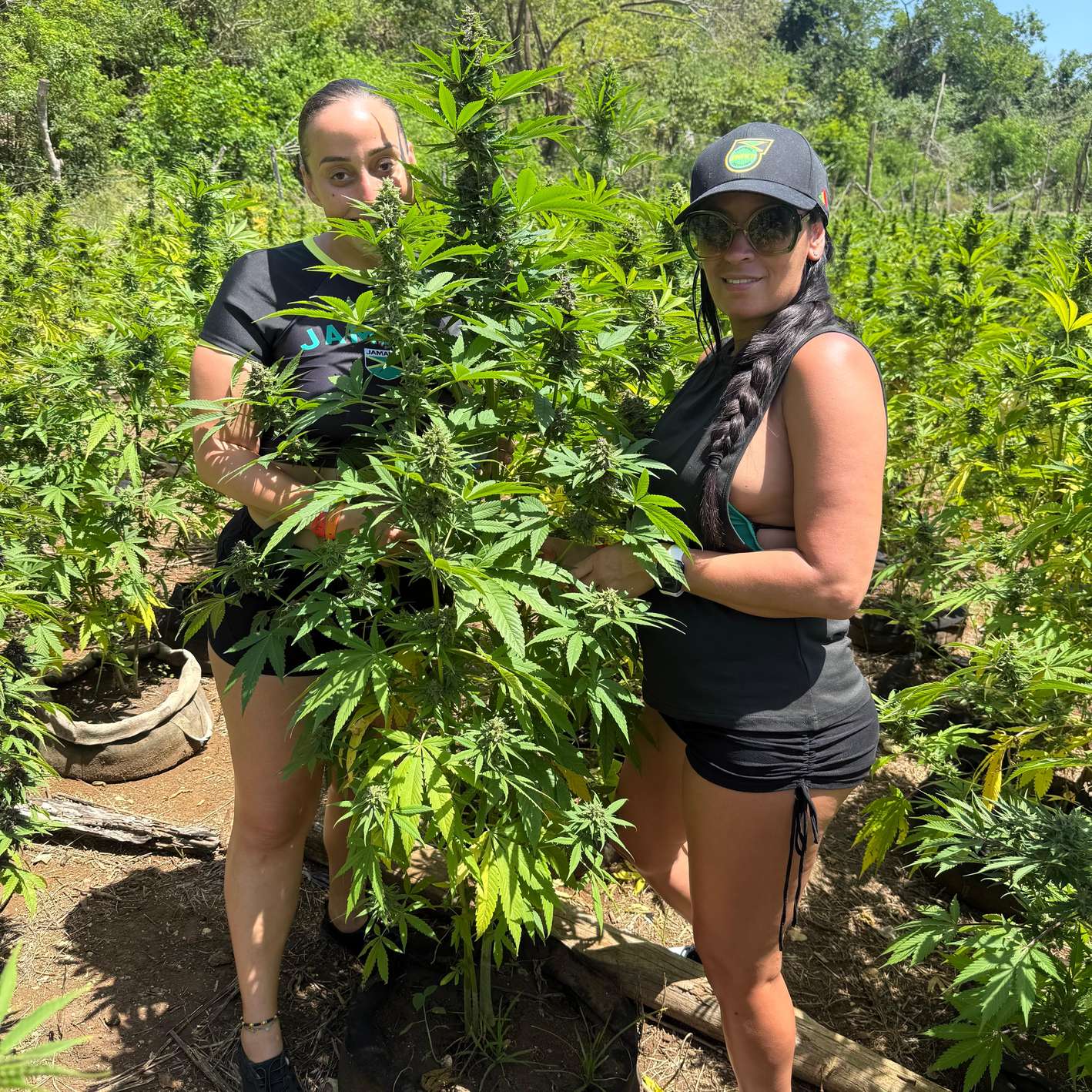
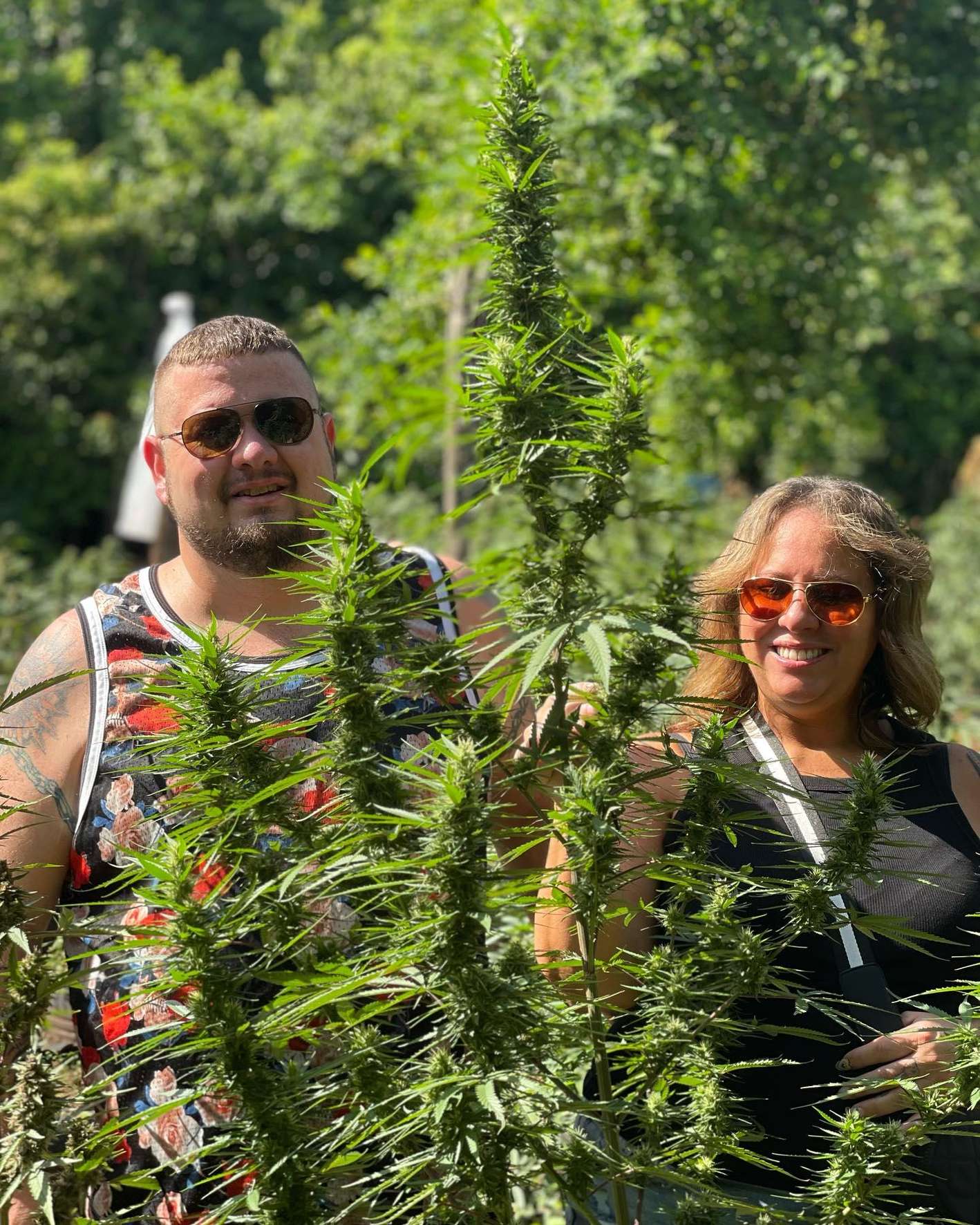
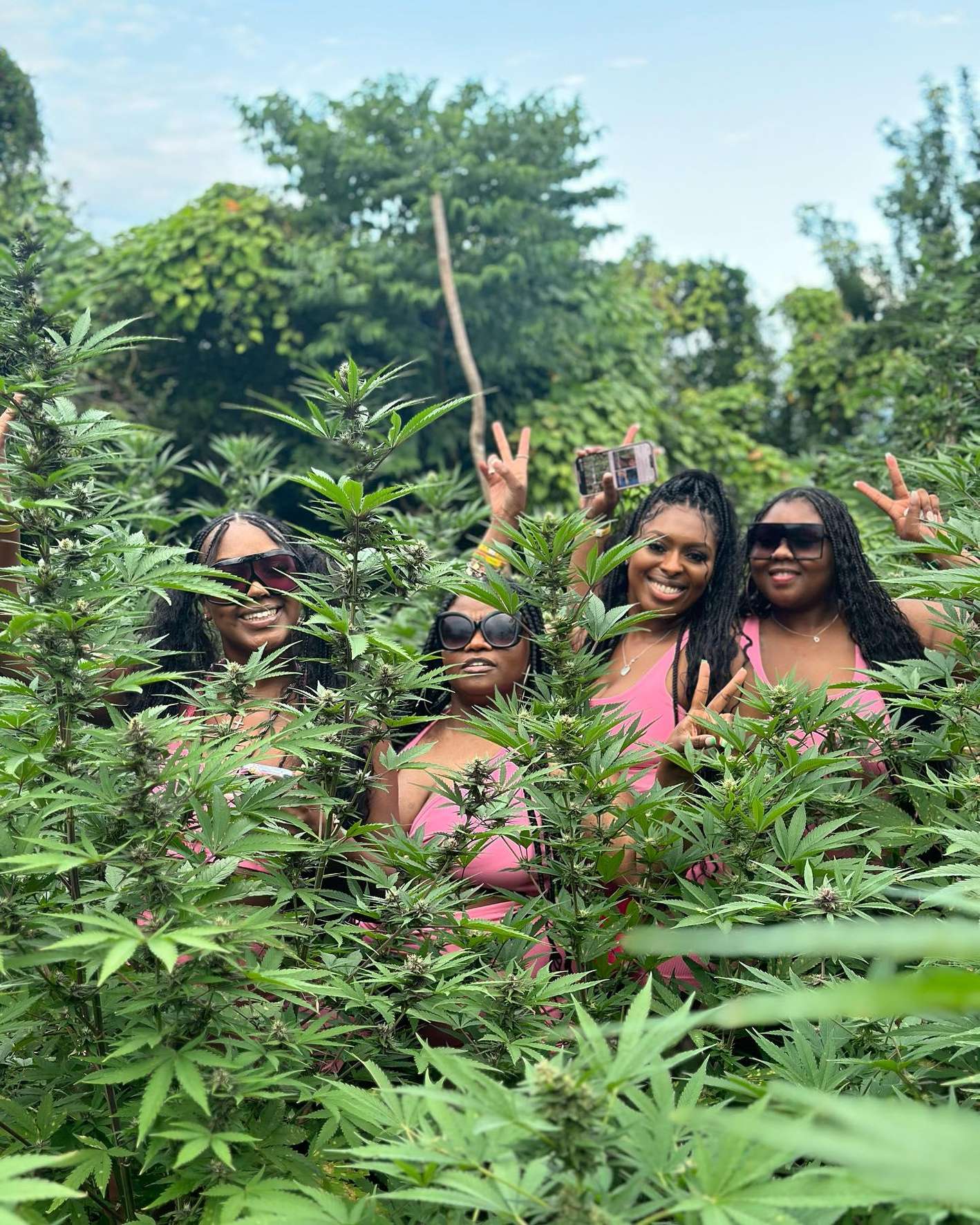
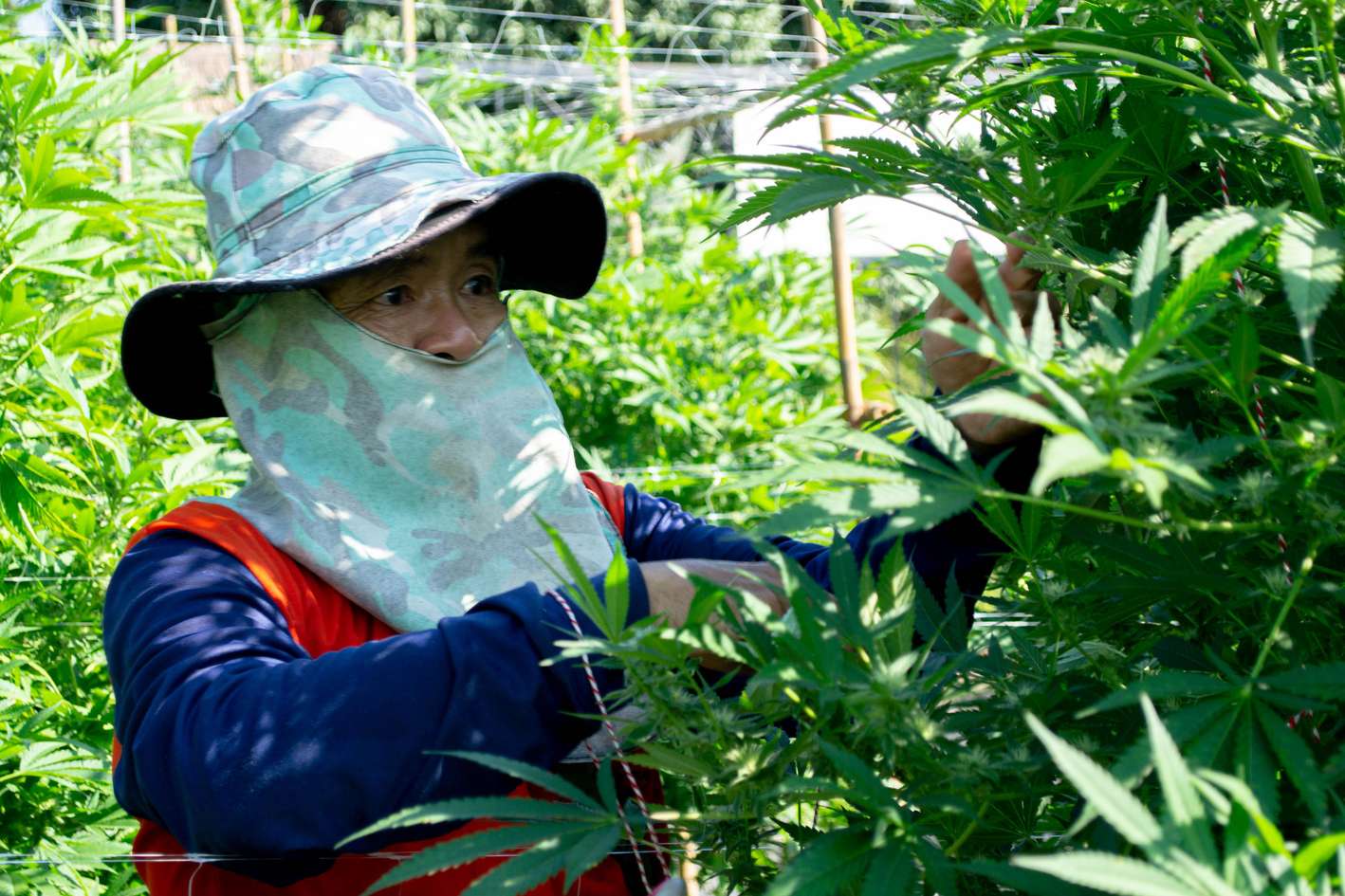
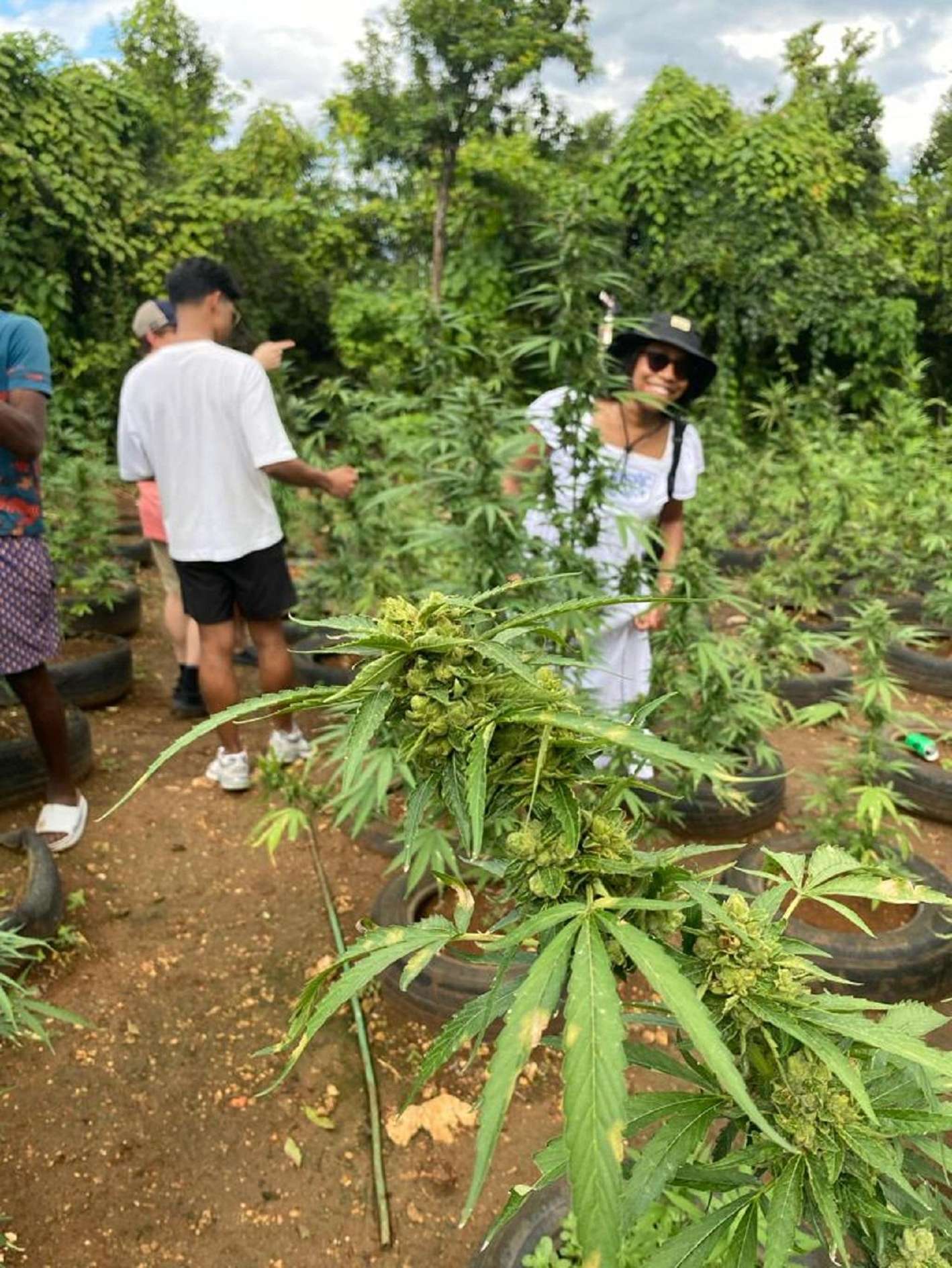
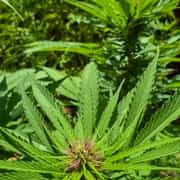
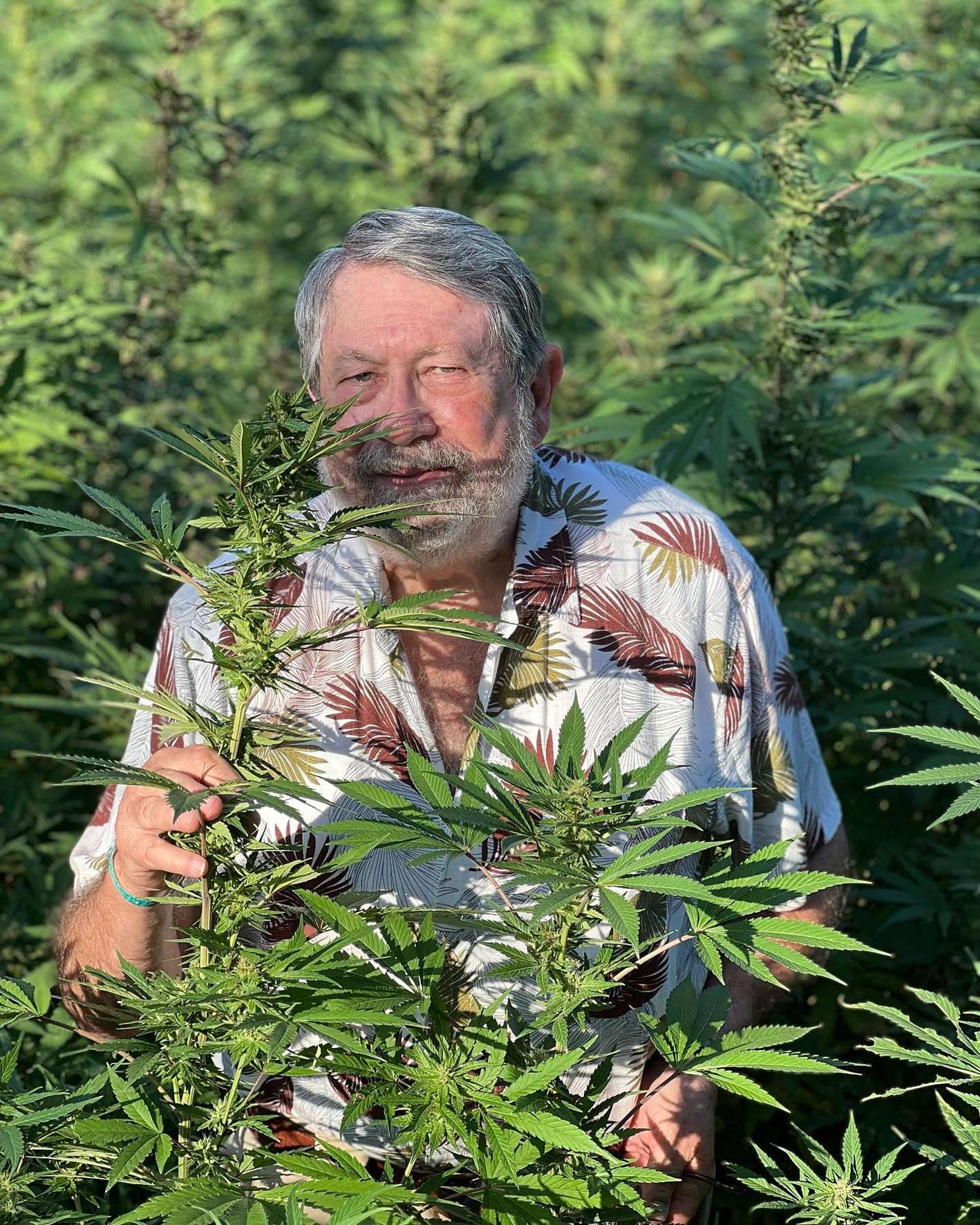
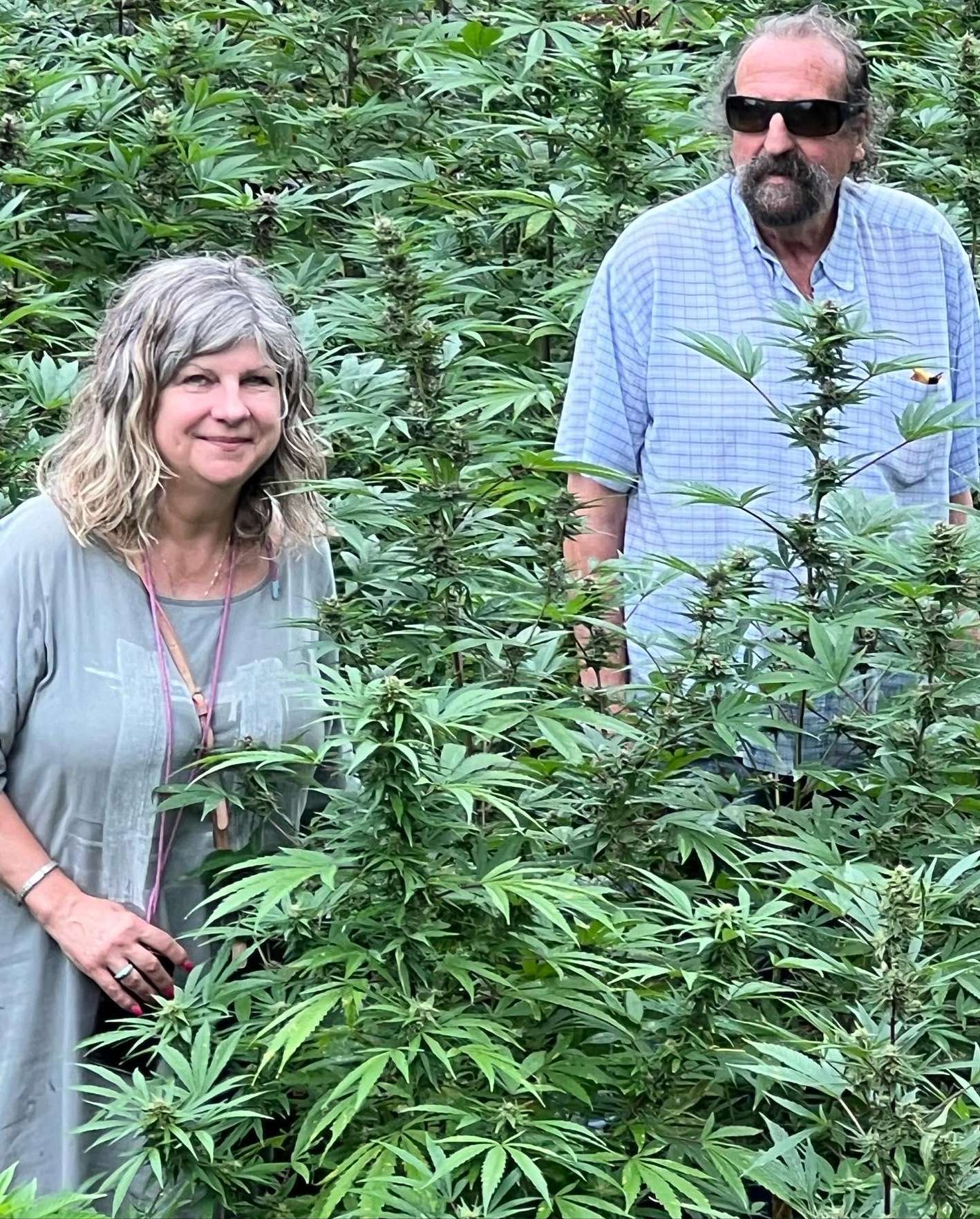
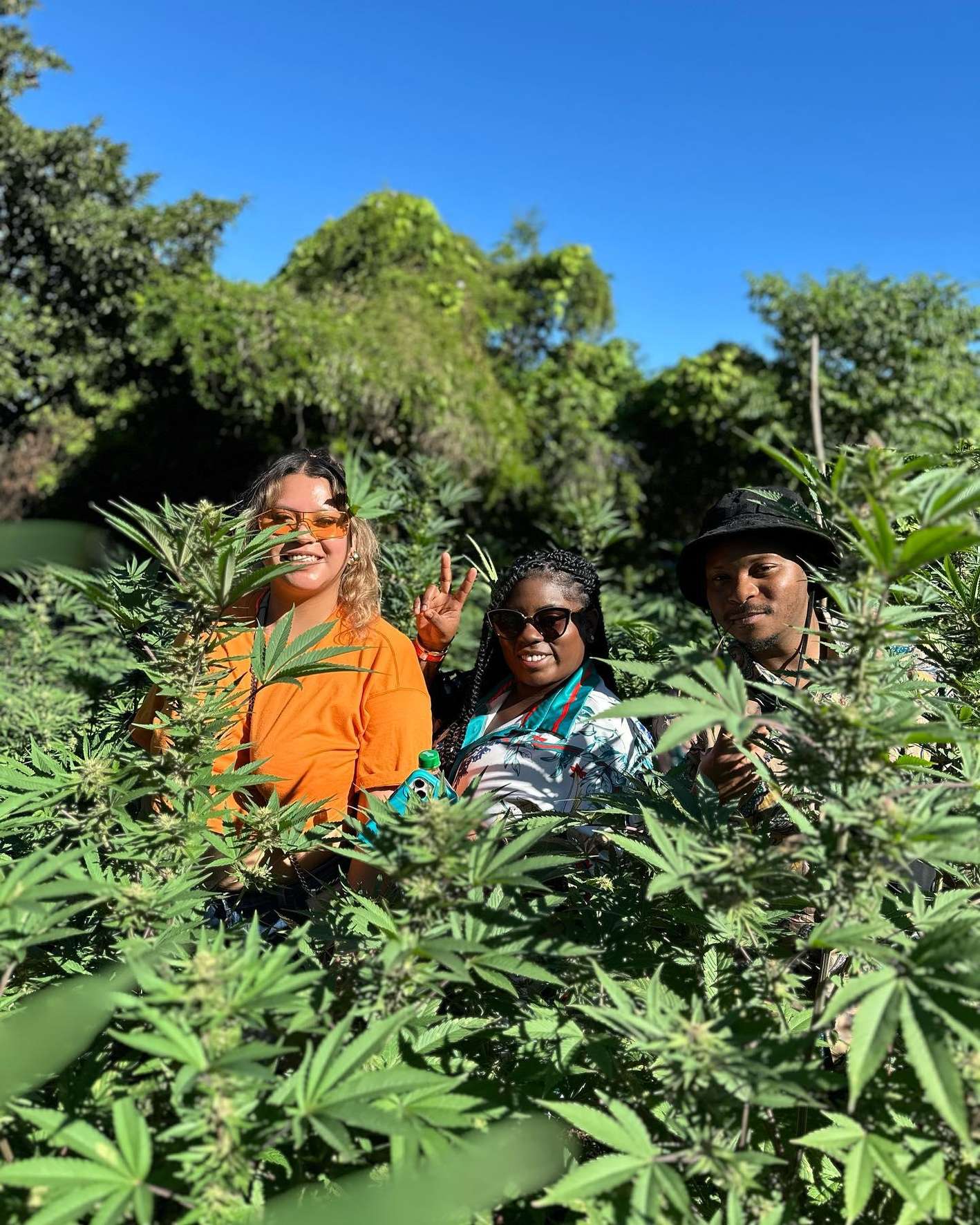
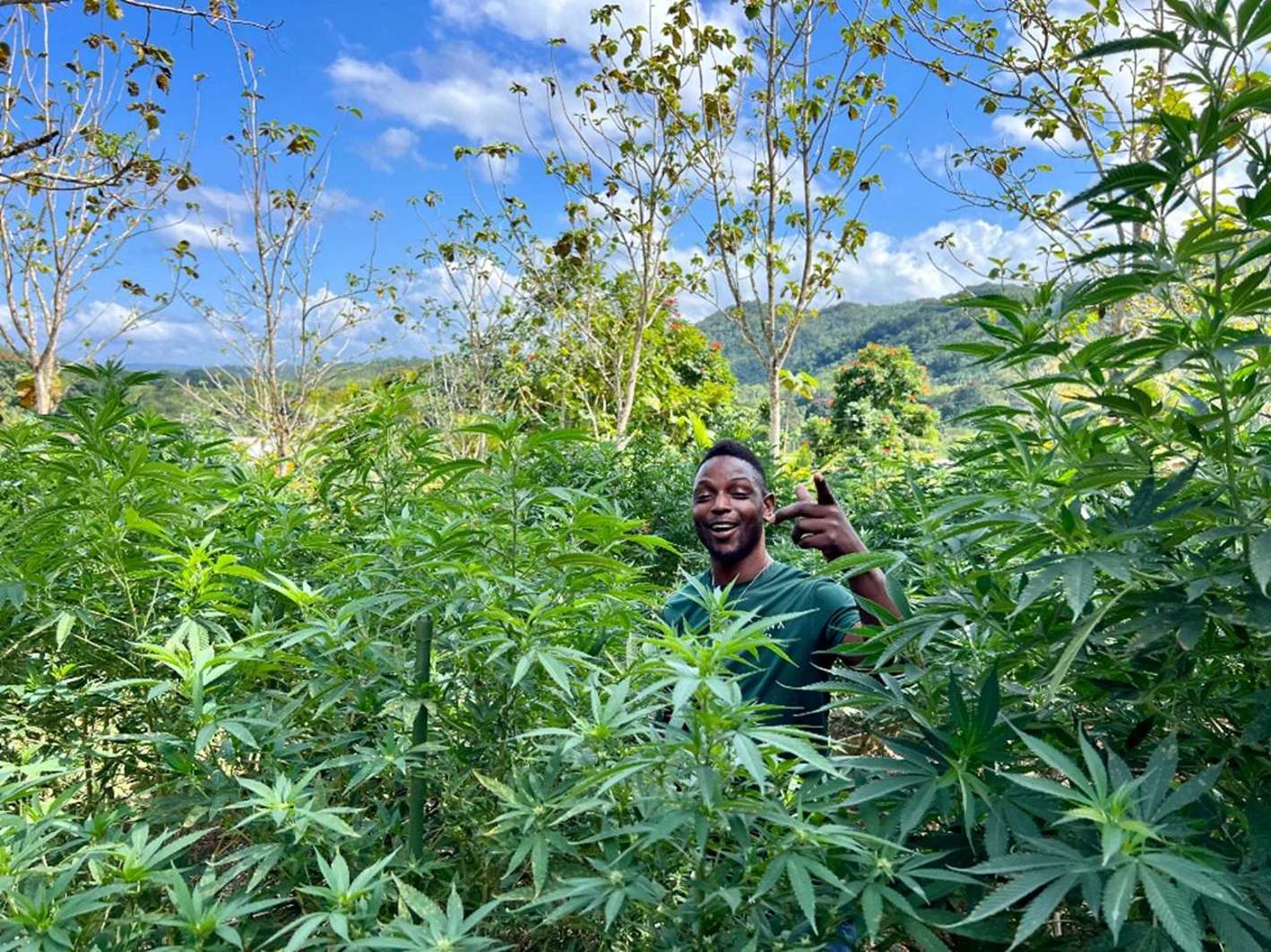
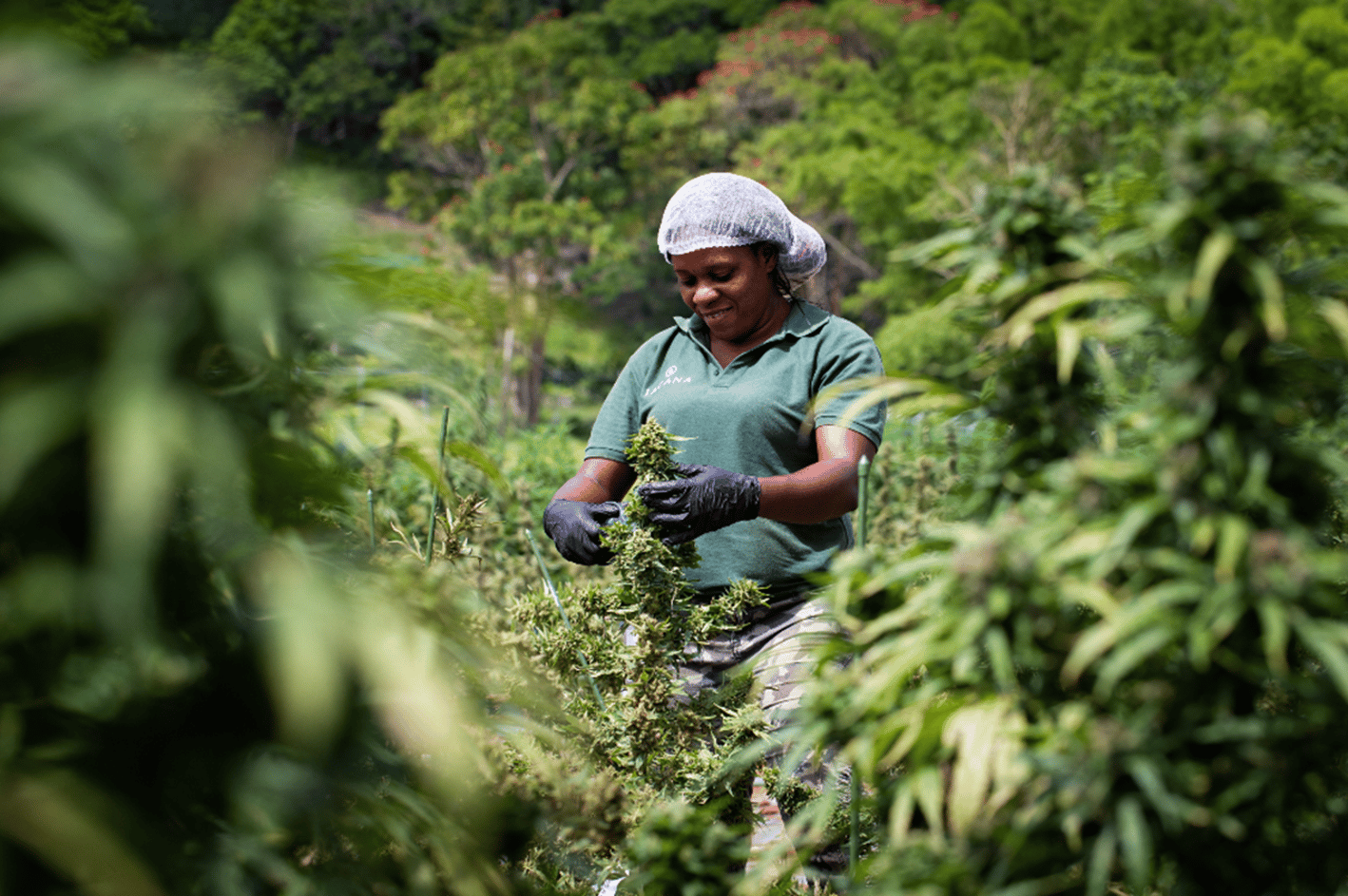
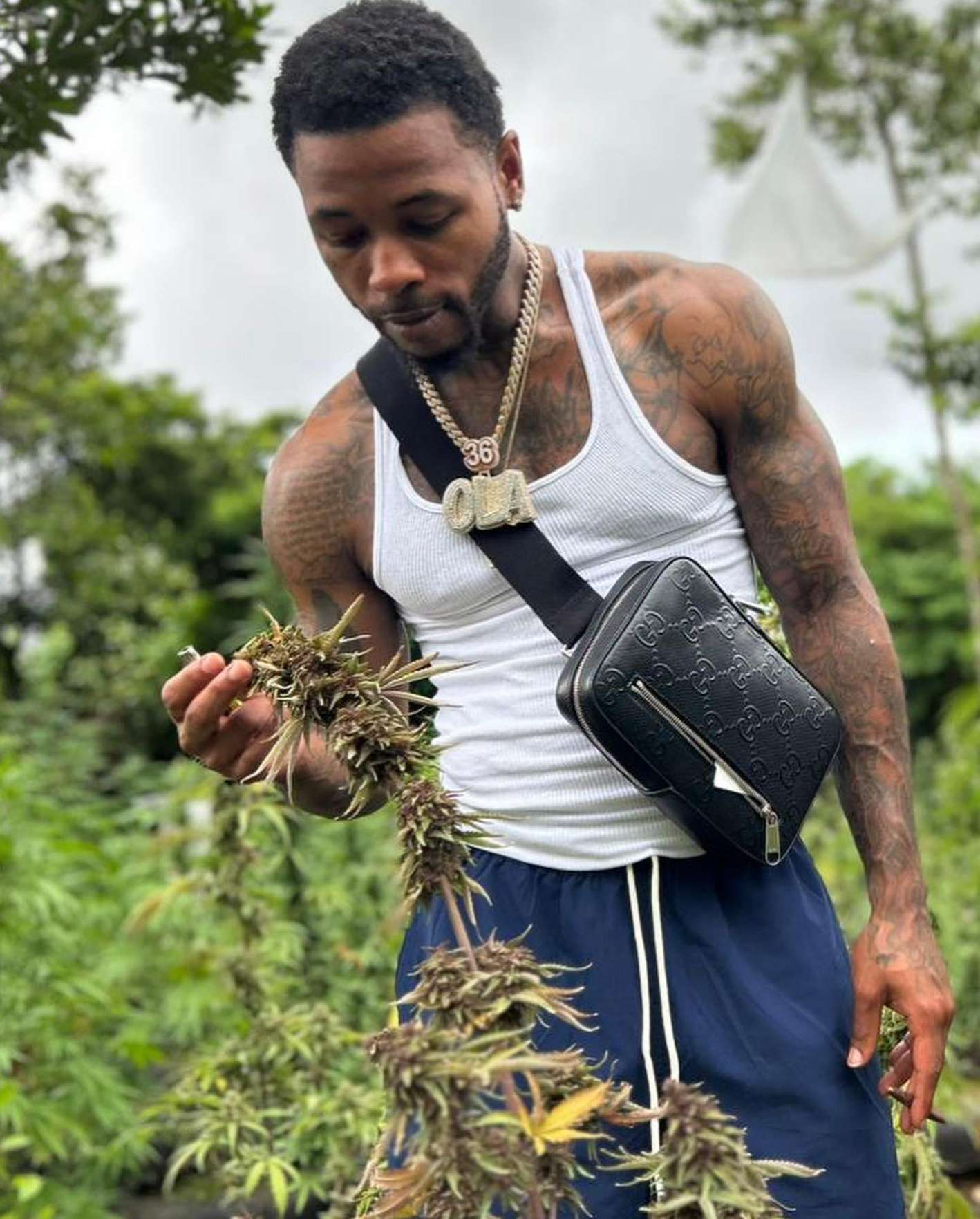
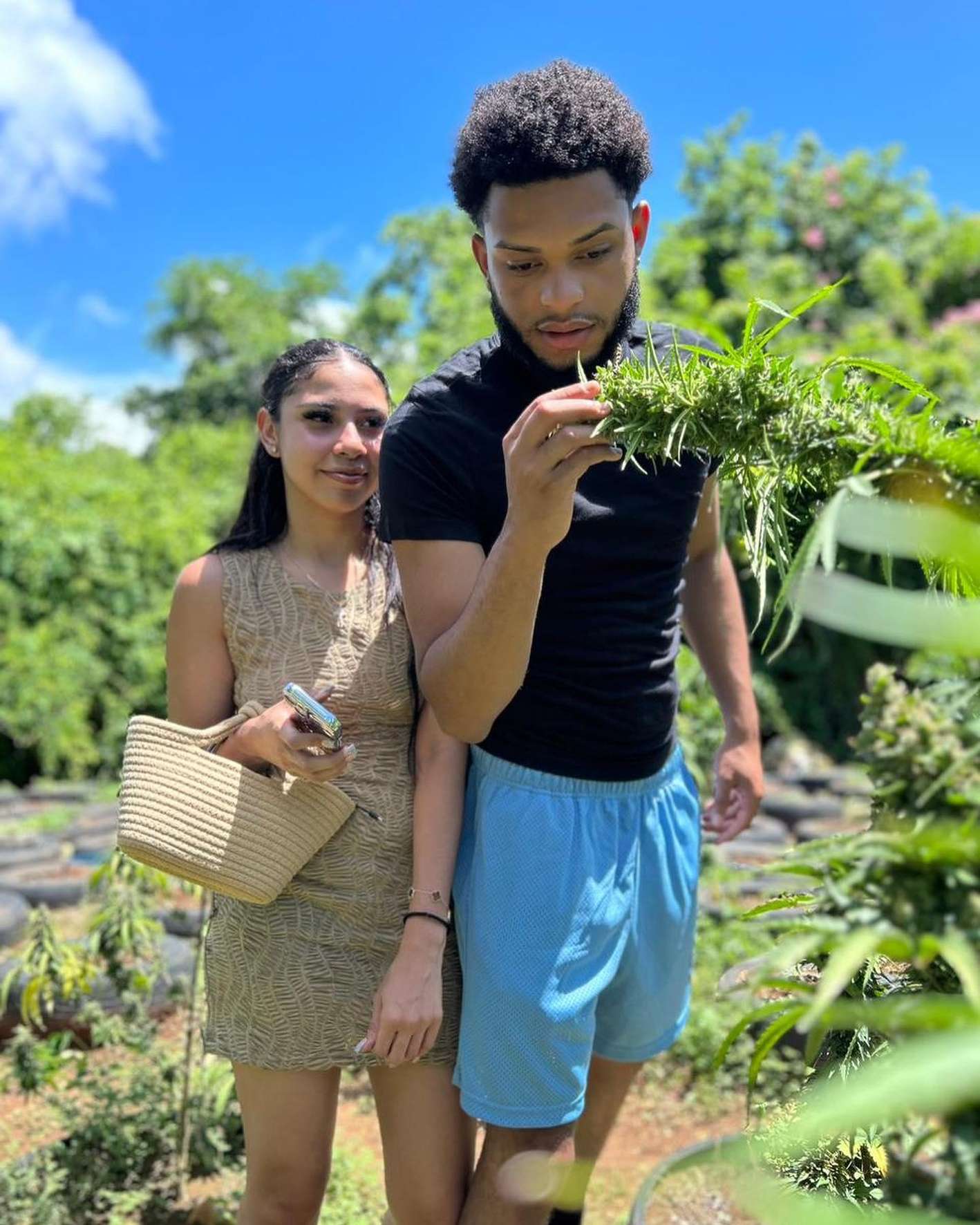
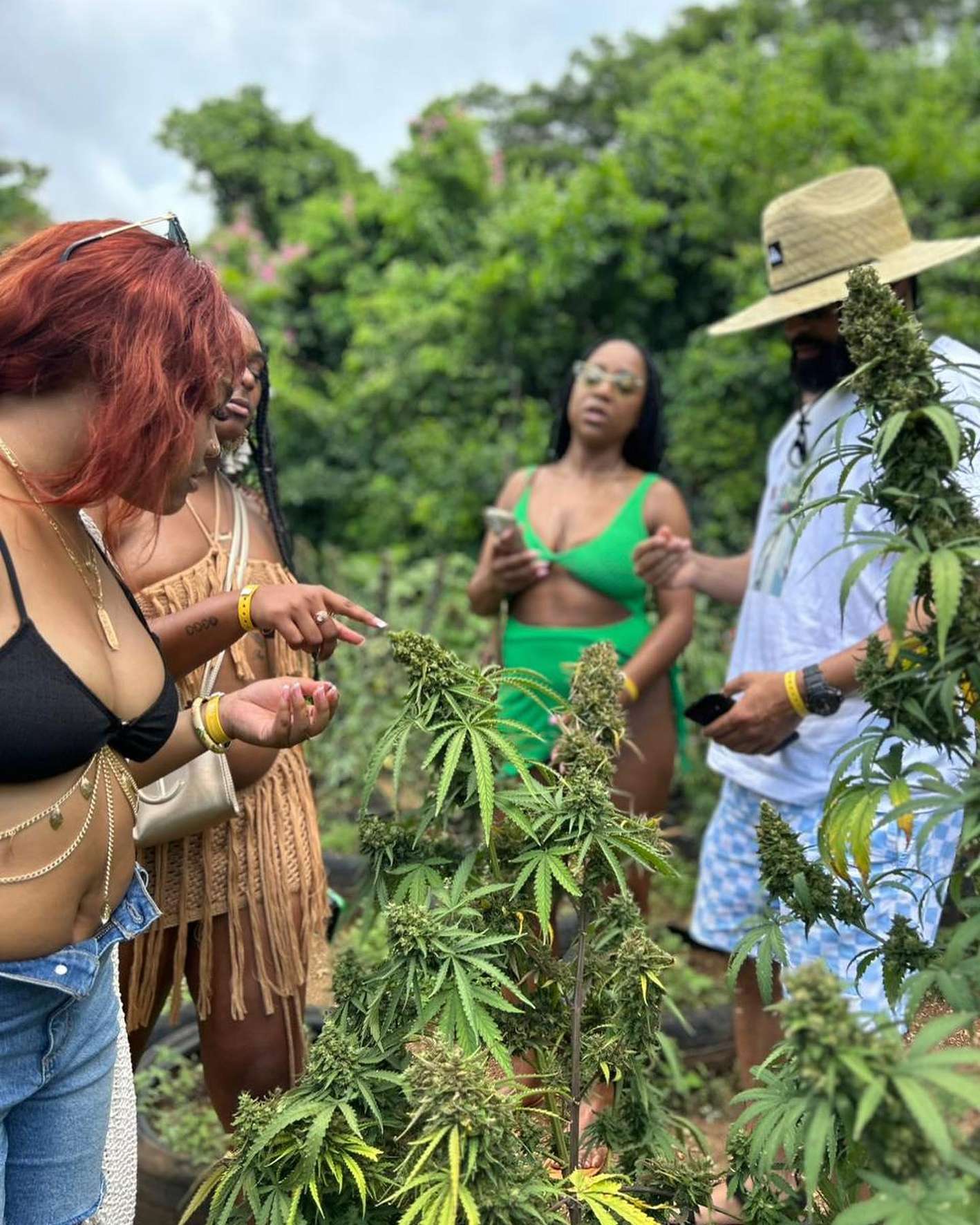
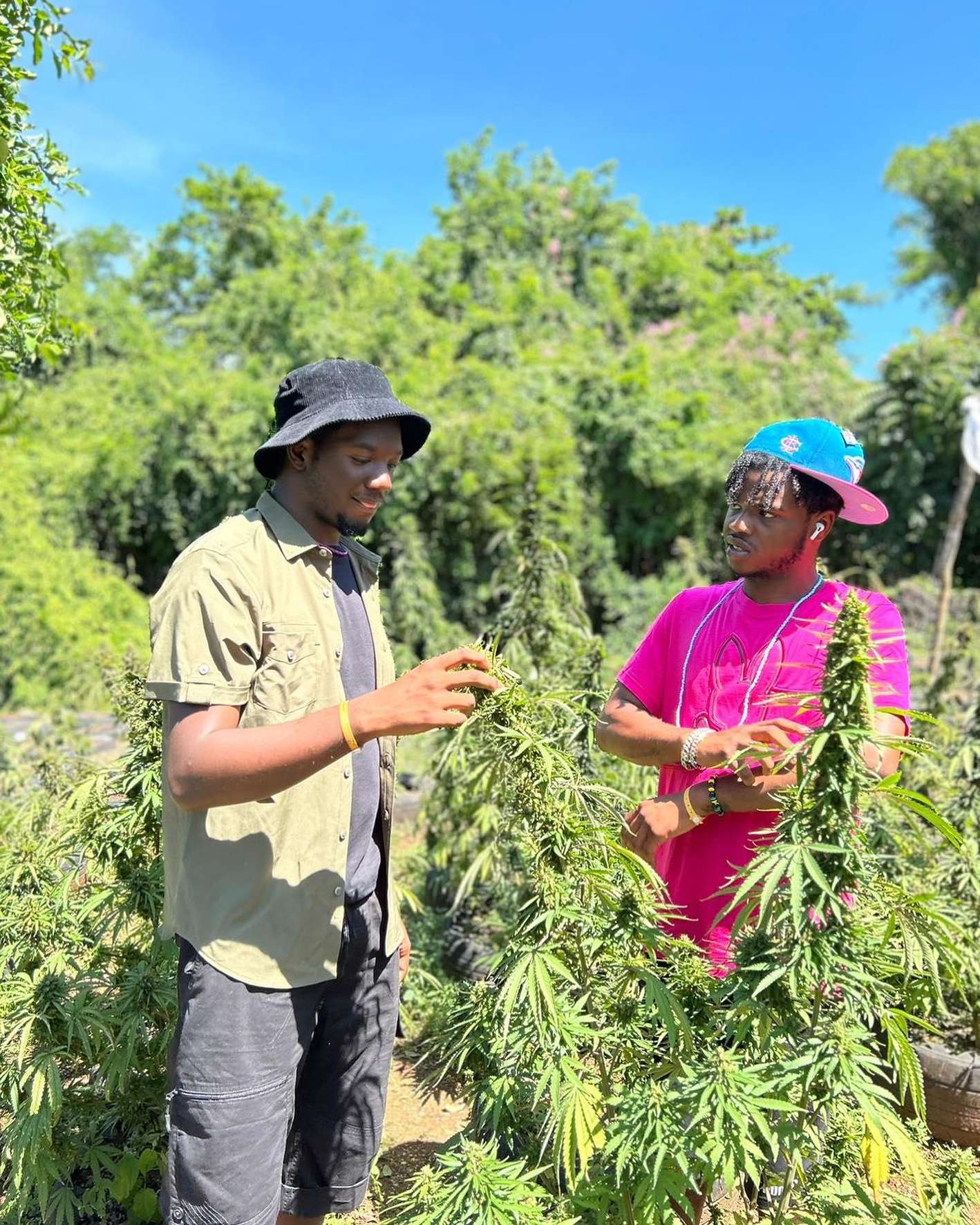
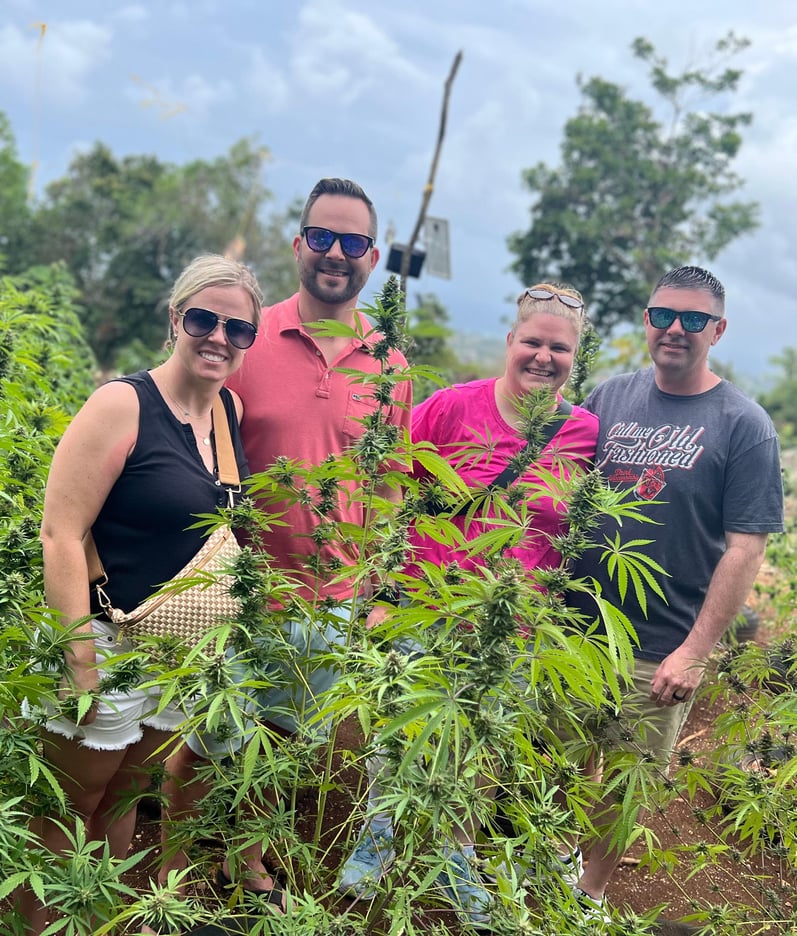
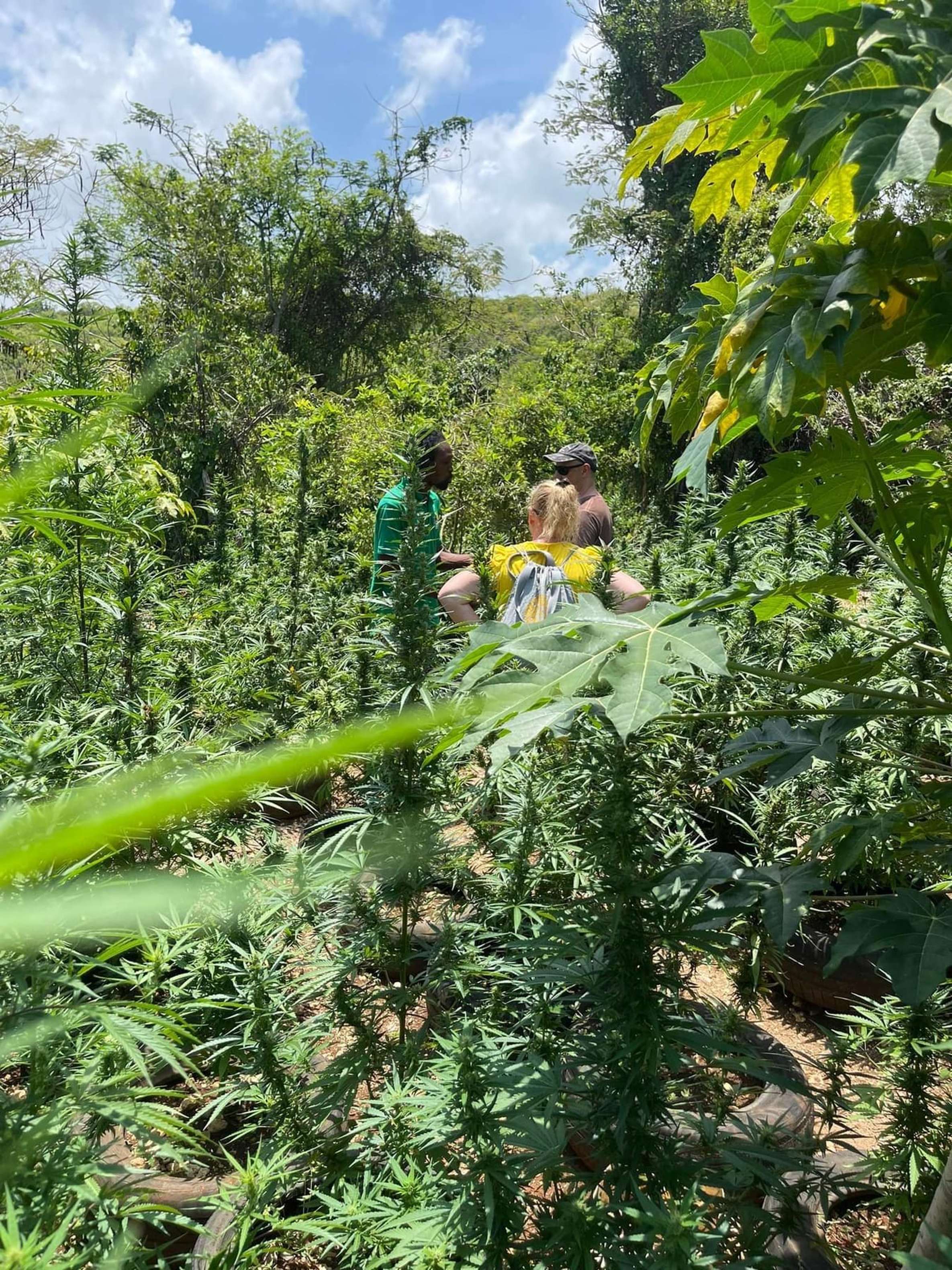
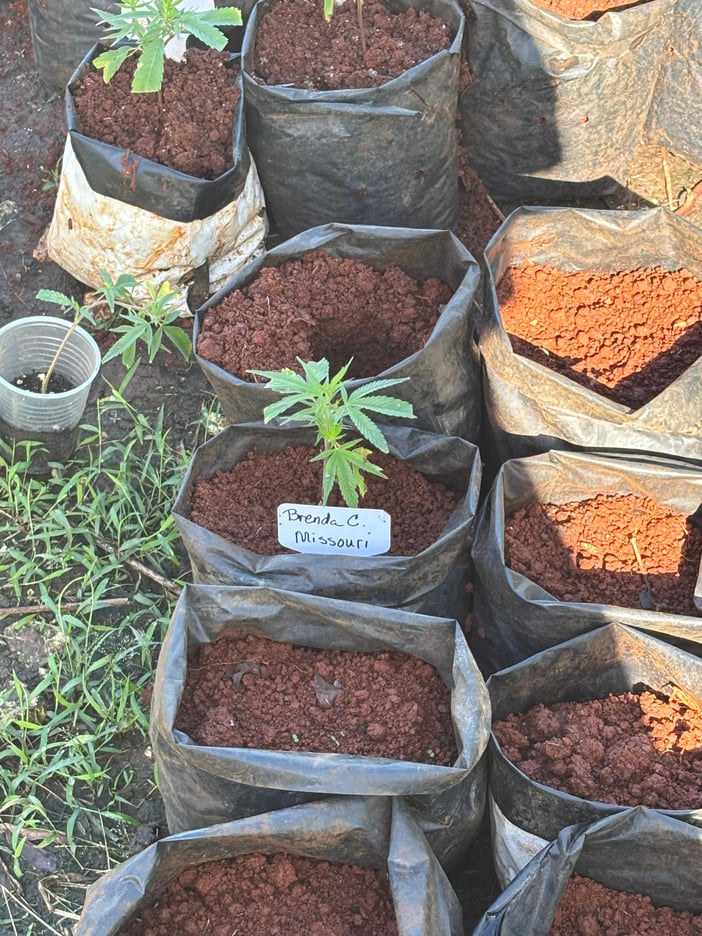
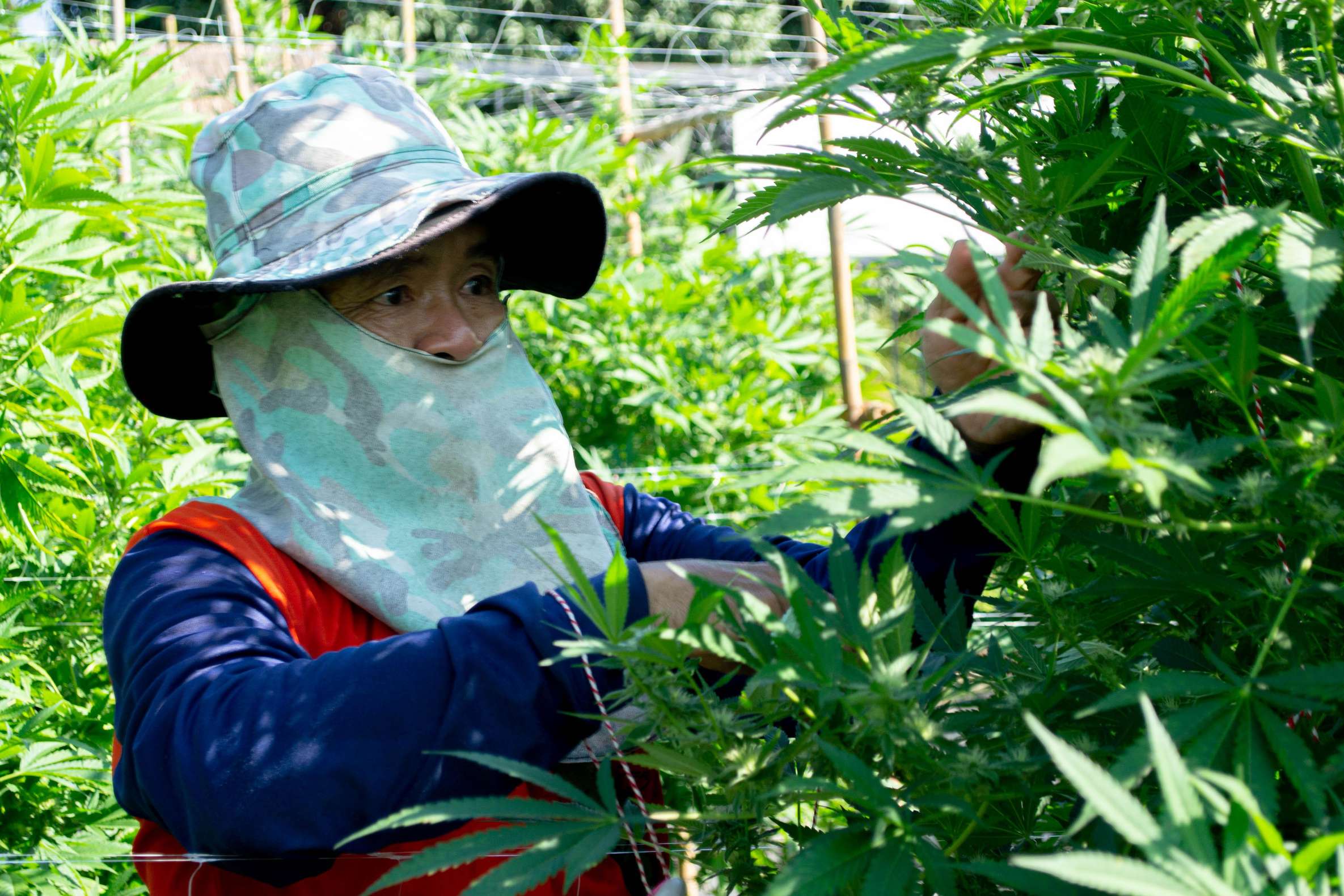
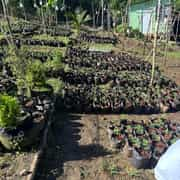
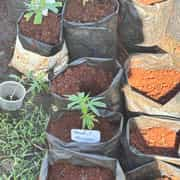
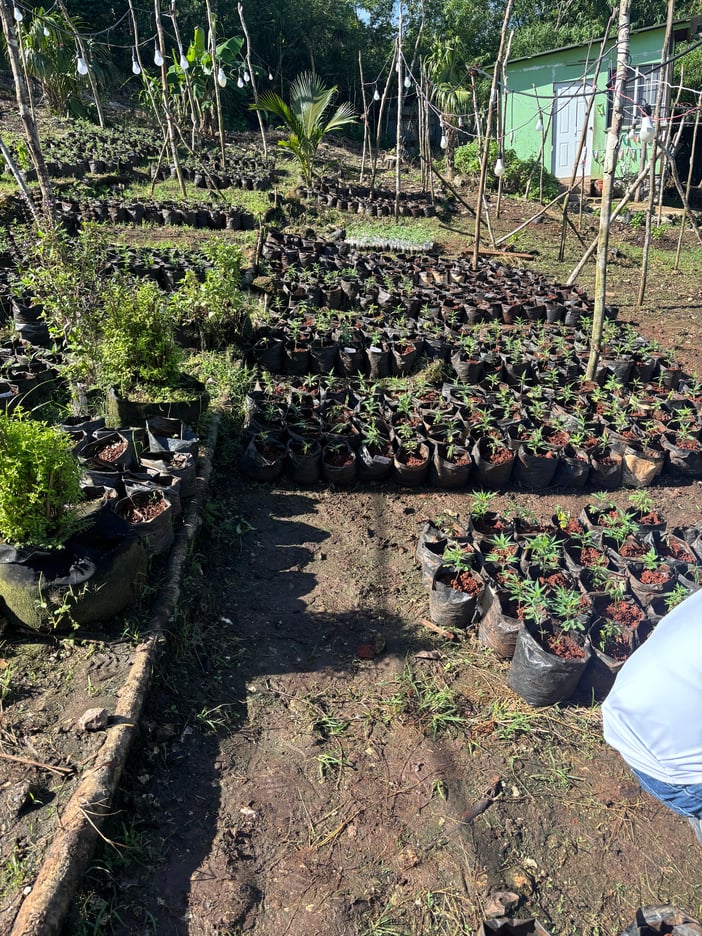
Your guide starts with the story: how ganja shaped Jamaican culture and where the plant sits in the island's agriculture today. Then comes the walk itself, through rows of plants at every stage, seedlings to harvest-ready, with time to ask the growers anything about soil, irrigation, or how a crop can go wrong.
1Arrival and welcome· about 10 minGuides greet you at the farm gate and set the scene with the history of cannabis in Jamaica and its cultural weight.2The plant in Jamaican life· about 10 minYour guide explains the plant's role in Jamaican culture and its place in the country's agricultural industry.3Walking the grow rows· about 15 minYou move through the fields and see cannabis at every stage of growth, from seedlings to mature plants ready for harvest.4Varieties and growing methods· about 15 minThe guide walks you through the strains grown here and the techniques behind them: soil composition, irrigation, pest management.5Questions with the growers· about 10 minThere is time to ask what growing a successful crop in Jamaica actually takes, including the challenges farmers face.
Where the other tours go
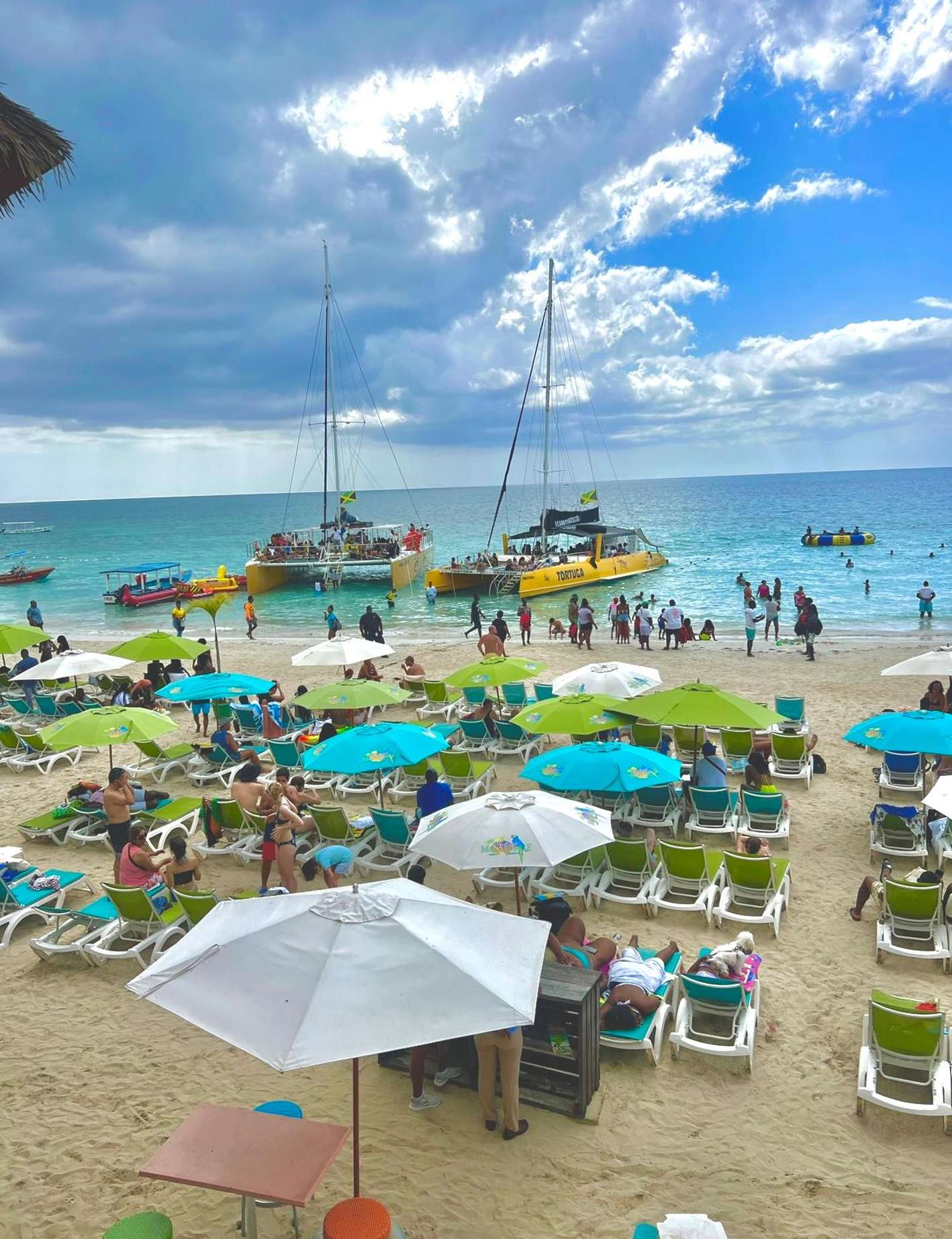
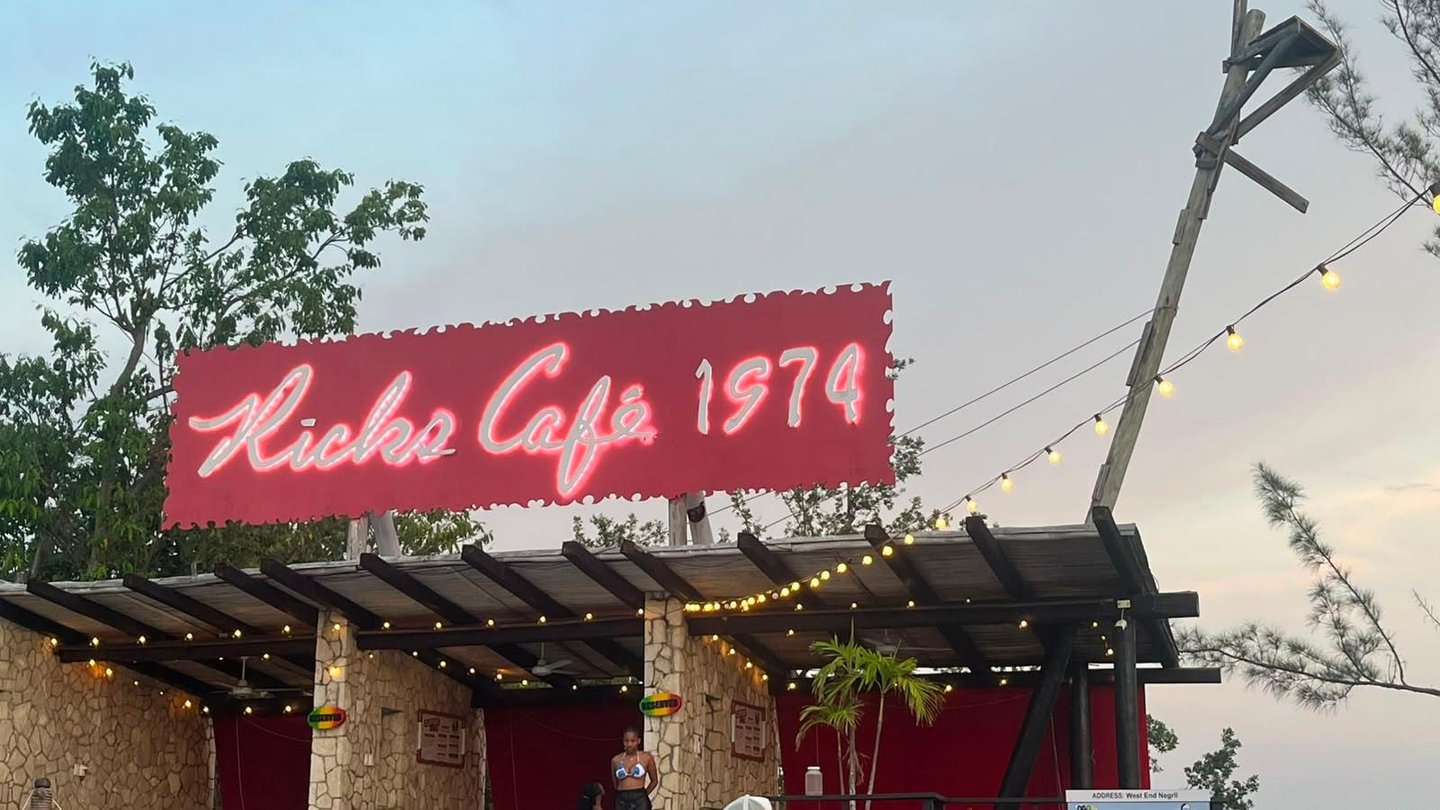
7 Mile Beach, Negril JamaicaRick's Cafe
Negril: 7 Mile Beach, Weed Farm, and Rick's Cafe Tour
Choose a date first, then check which morning slot is open. Pickups on the Chiang Mai tours run between 8:30 am and 9:30 am, so book a date when you can be ready early.
Pro tipBook a morning slot. Greenhouses and fields are coolest before midday, and afternoon rounds can push past 90 °F.
RecommendedConfirm the date before locking in the rest of your itinerary, since farm tours run on fixed pickup windows.
02
Choose the right option
Most tours list several pickup options, and the option you pick changes the duration. On the Negril farm and mineral spring tour, for example, the Negril option takes 5.5 hours while the Falmouth one takes 6.5.
Common mistakeFirst-timers book the cheapest option, then discover it starts far from their hotel. Pick the option that matches where you actually stay.
Pro tipOn some Jamaica tours, entry fees are not included. Read what each option covers before you commit.
03
Check who can join
Age rules are hard limits on both islands. Jamaican farm tours require guests to be 18 or older, while the Chiang Mai tours admit adults 20 and over only, with photo ID possibly requested at the gate.
ImportantBring a passport or driver's license. Age checks happen on arrival, and no ID means no entry.
Common mistakeFamilies book Chiang Mai farm and cooking class tours for teenagers, then learn on the day that under-20s cannot join.
04
Pay and read your confirmation
After payment you get a voucher, and the operator follows up with details by message. On the Chiang Mai tours your exact pickup time is confirmed the evening before, so keep notifications on.
ImportantFree cancellation runs up to 24 hours before start time on these tours, so a change of plan costs nothing if you act a day ahead.
Pro tipSkip the add-ons at checkout. Tips, food, and drinks are billed separately, and you can decide those on the day.
Most reviewers praise their guide and driver by name, calling them knowledgeable, patient and easy to travel with.
Best surprise
Several travelers loved cooling off in the mineral spring or jumping from the cliffs after the farm walk.
Most common wish
Many wished the visit ran longer, and some wanted more on Rastafarian herb culture.
A private day of herb fields, exotic birds and a chalice
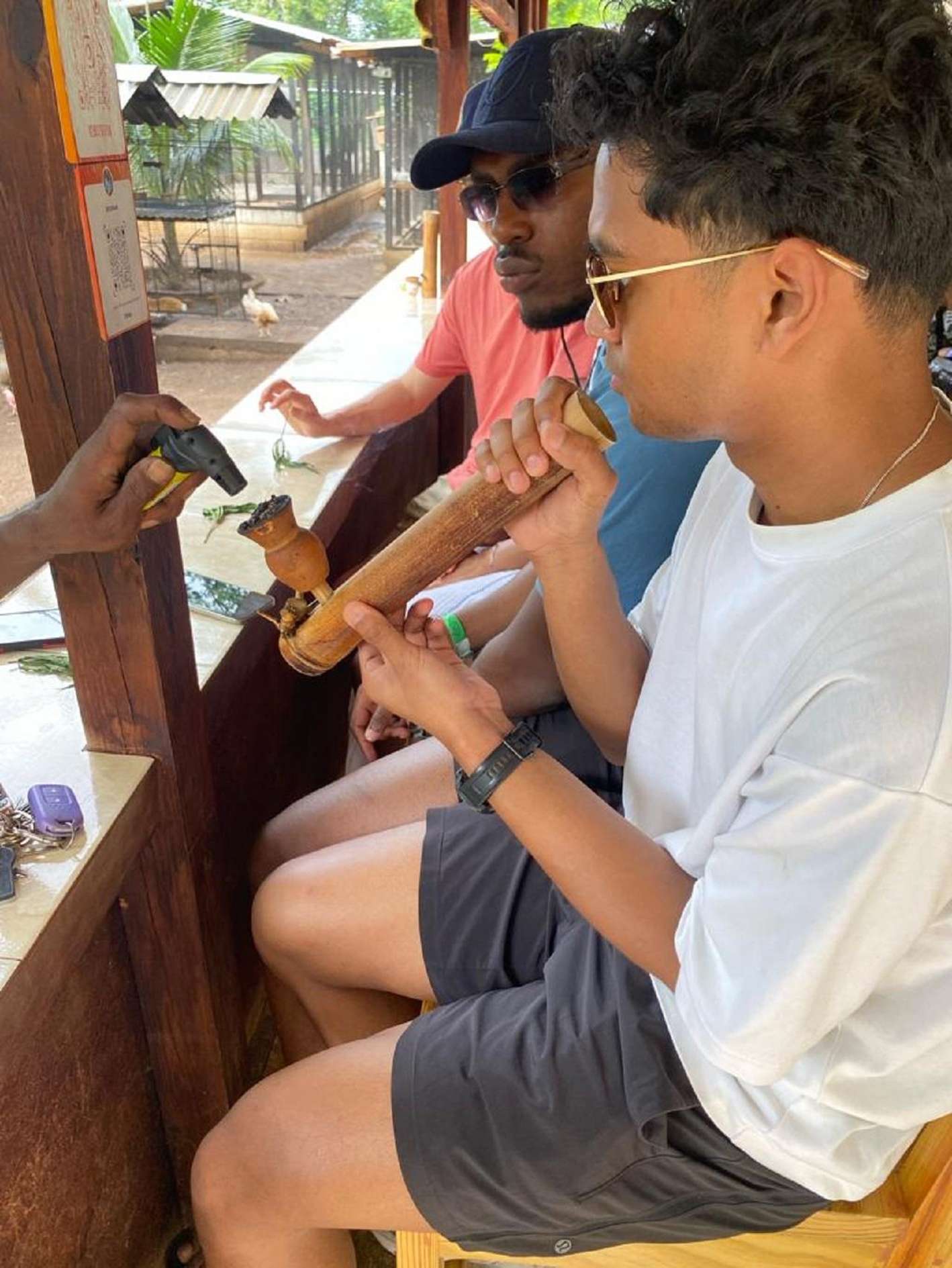
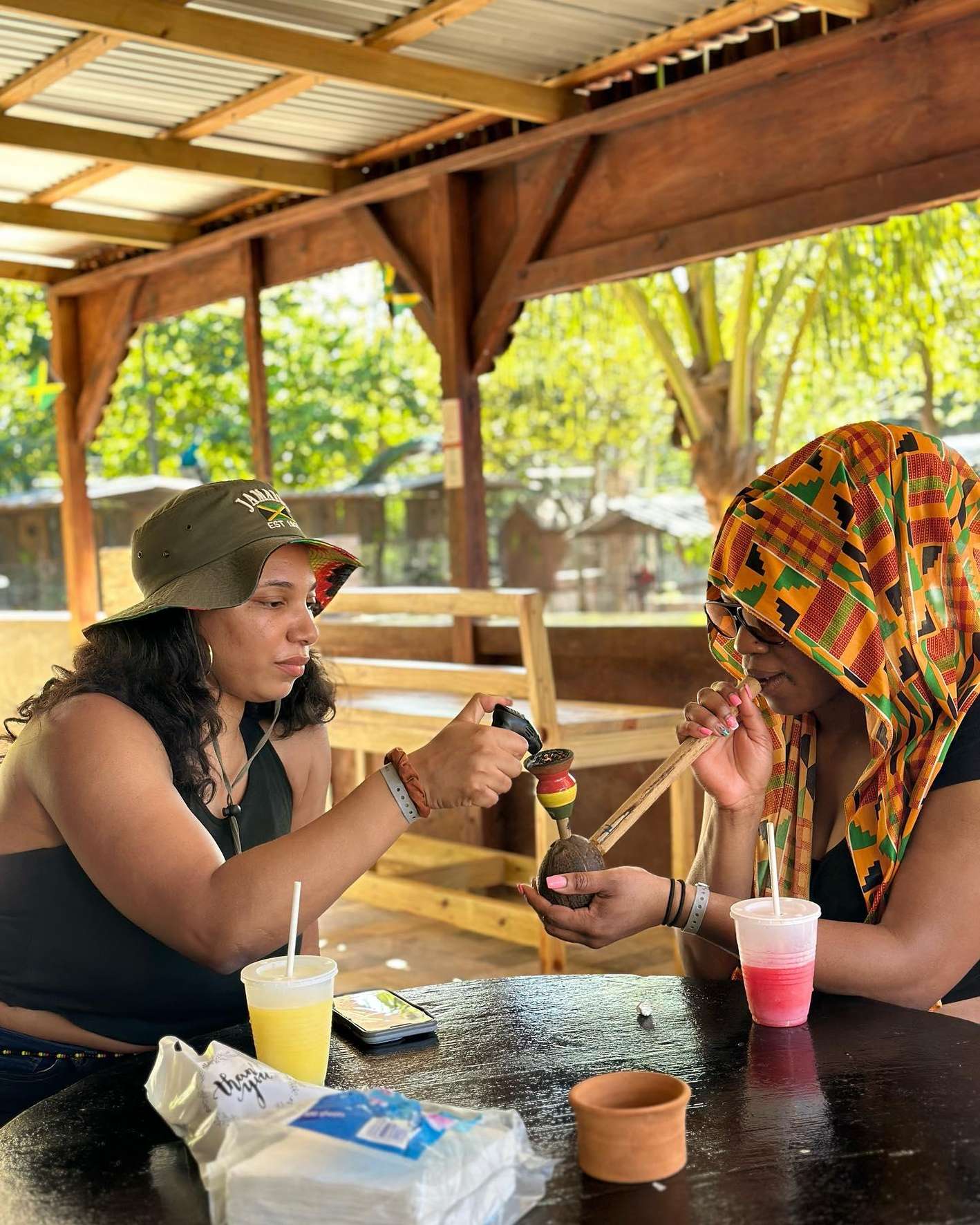
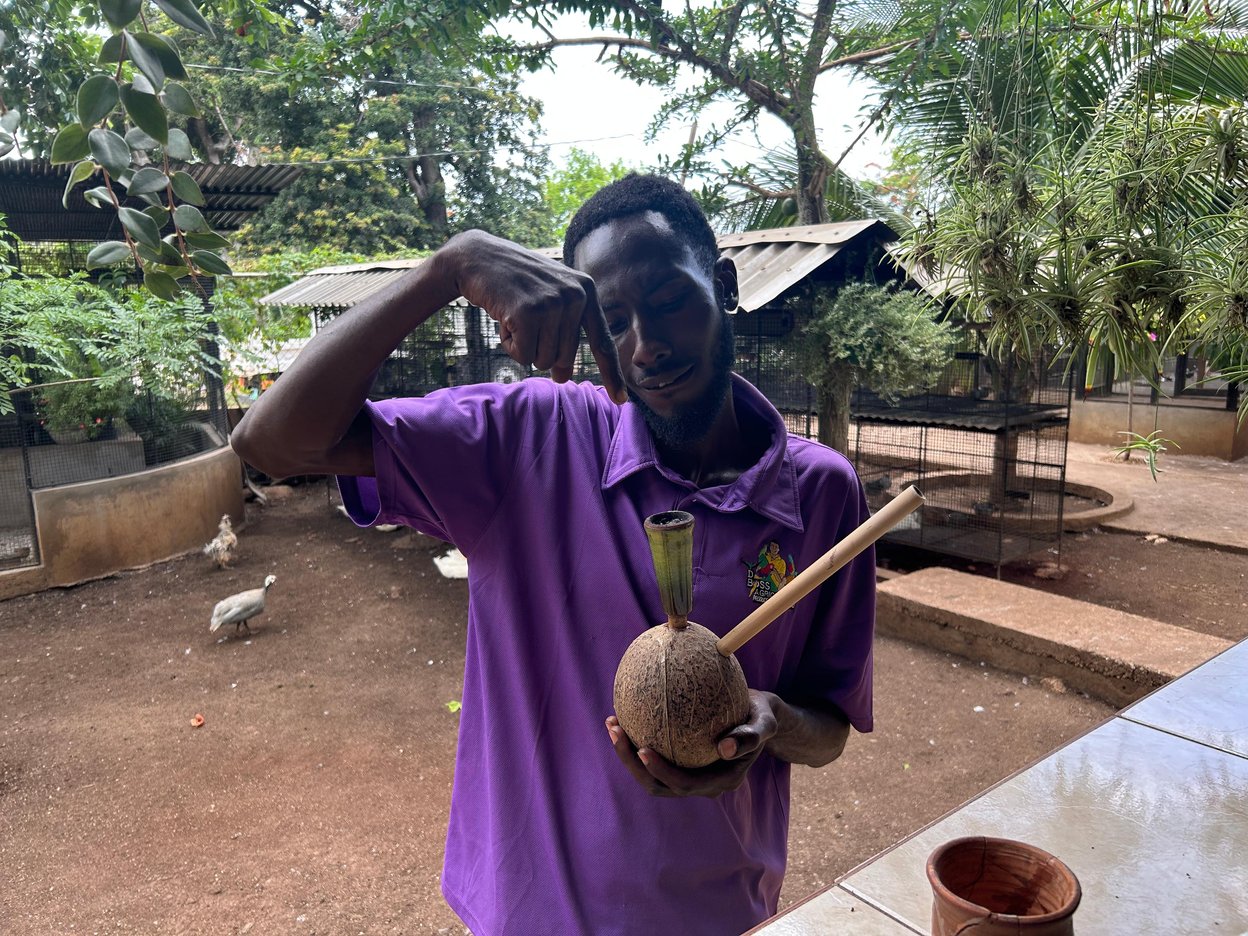
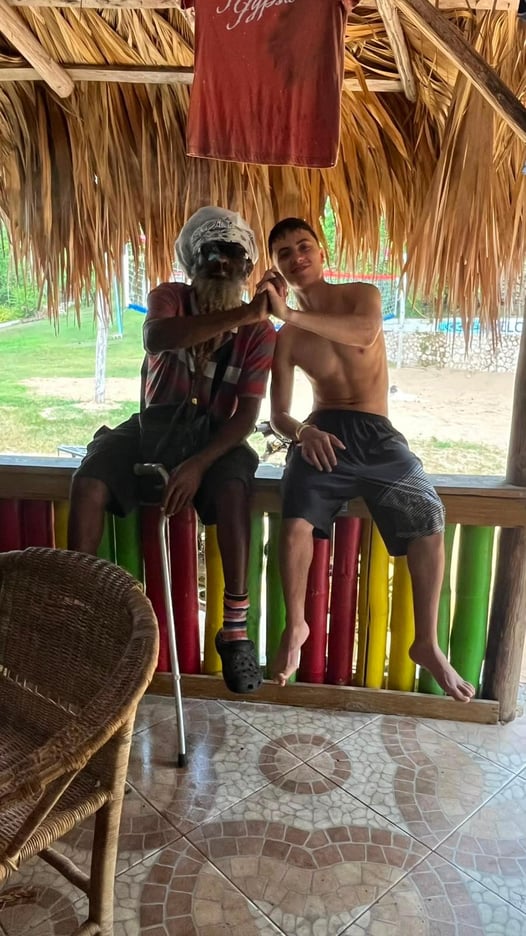
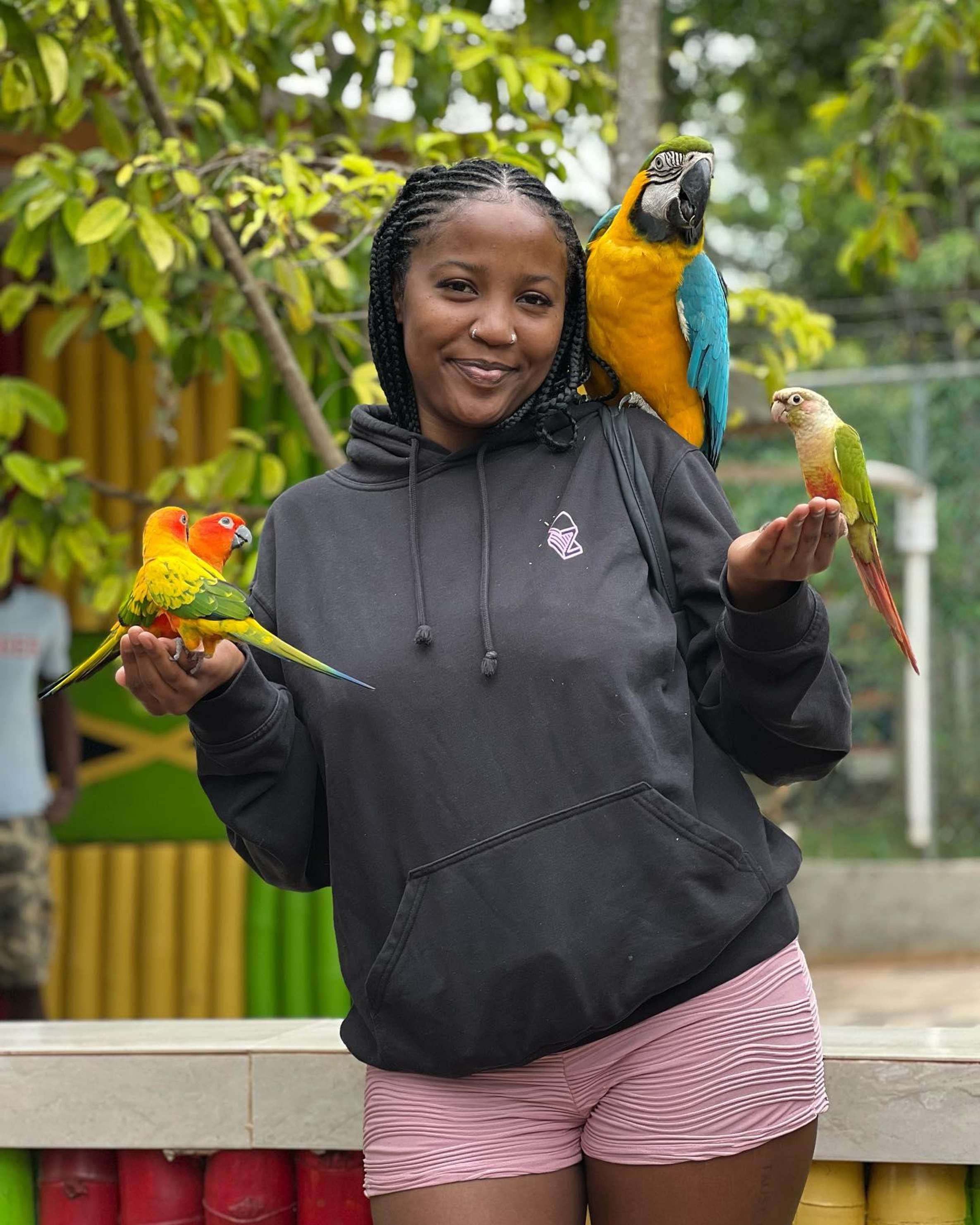
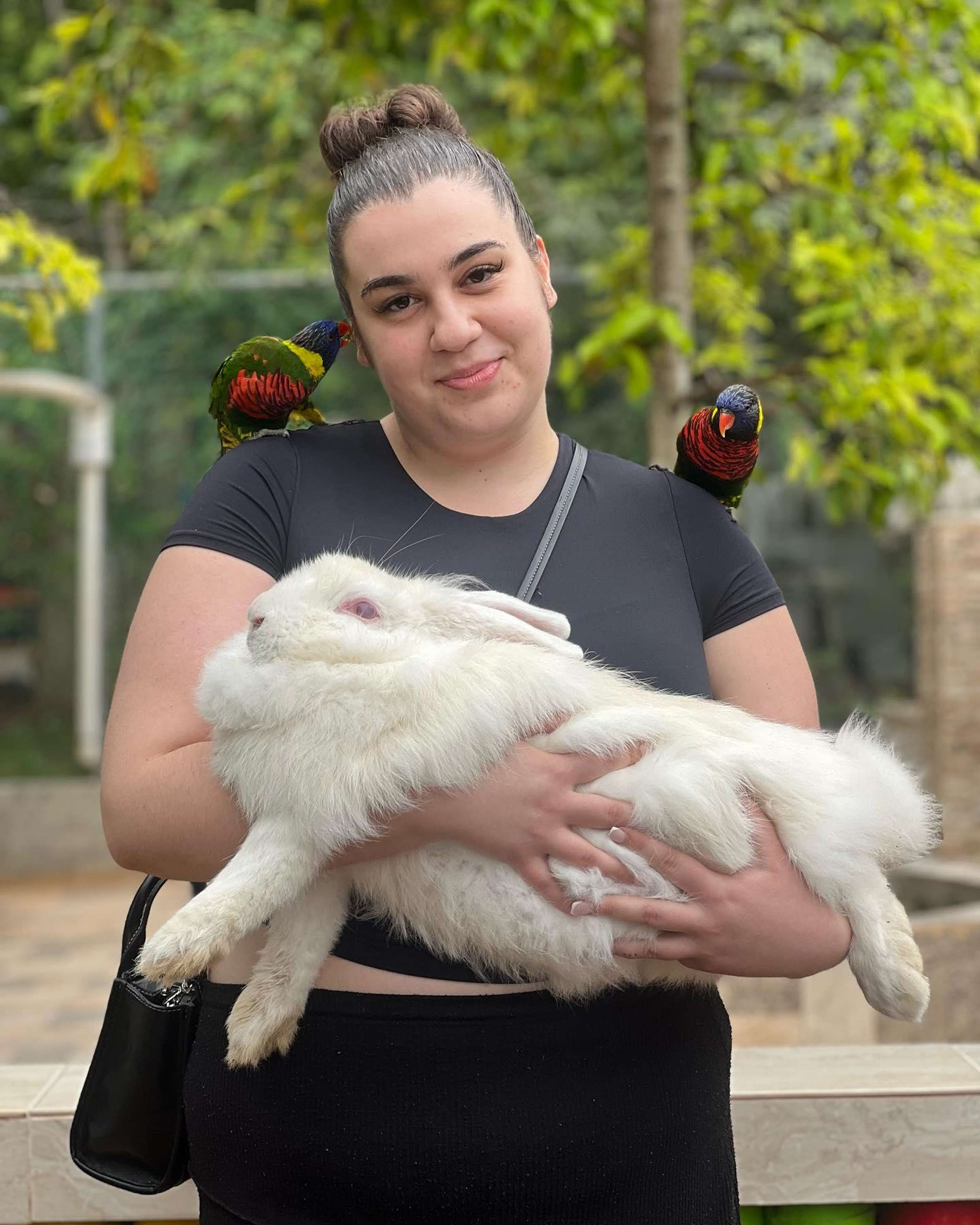
This private tour pairs a working weed farm with a stop most farm visits never include: a sanctuary where you pet and play with exotic birds. In the nursery you touch and smell the plants, hear the whole process explained from seed to sale, and finish with a smoke from a traditional chalice pipe.
It suits travelers who want more variety than a straight farm walk, and anyone who would rather not share a bus.
Farm plus birds in one dayAfter the nursery and a chalice session, you spend as long as you like with the birds at the sanctuary.
A guide to yourselfThis is a private, air-conditioned trip with hotel pickup and drop-off, rated by more than a hundred past guests.
No fee surprisesEntry fees for the farm and the sanctuary are payable by you on arrival, so plan cash for the gates.
Free cancellation up to 24 hours before start time lets you hold a date now and change it later.
Some bookings cover the farm gate fee, others cover the ride only. The private farm and bird sanctuary tour from Montego Bay leaves fees to you on arrival, so read the included list before you book.
Consumption
Chiang Mai tours allow no smoking, sampling, or carrying away of cannabis, and alcohol stays behind too. Jamaican farms are friendlier to sampling, including a draw from a traditional coconut chalice, but public smoking is banned.
Non-smokers
You can skip the herb entirely and still get your money's worth. Both countries run these as educational visits: cultivation methods, medicinal uses, and in Jamaica the plant's place in Rastafarian culture.
Cash
Carry physical cash for small Jamaican hill farms, which rarely take cards or digital payments. US dollars work around Montego Bay, though Jamaican dollars often get better rates on small purchases.
Timing
Morning is the slot that works. Pickup lands between 8:30 am and 9:30 am, and the walk through fields or greenhouses runs 9:30 am to 11:30 am, the coolest part of the day. Afternoon rounds push past 33°C with heat indices near 37°C.
Souvenirs
Buy nothing you plan to take home. Carrying cannabis, seeds, or plant parts across an international border is illegal from both countries and treated as smuggling, whatever a farm shop might suggest.
02
BookingHow far ahead, and what happens if plans change
1
Cancellation
Every tour here lets you cancel up to 24 hours before the start time for a full refund. If a storm washes out an unpaved Jamaican mountain road, the operator cancels without penalty and tries to reschedule you.
03
Before you goPapers, health, what to bring
4
Age limitsCan stop the day
Jamaican farms admit visitors from 18, with photo ID at the gate. In Chiang Mai the floor is 20, and farm tours there are not suitable for anyone younger, even teenagers who only want to look.
Documents
Bring a passport or driver's license with a photo. Check-in may ask for it at Jamaican farm gates, and on the Chiang Mai tour photo ID can be requested on arrival for adults 20 and over.
Footwear
Hillside Jamaican fields mean a real outdoor walk, small rocks included on the Negril route, so wear sturdy closed-toe shoes. White sneakers and flip-flops will not survive wet red soil; dark, breathable clothing and a spare change of shoes serve you better.
What to bring
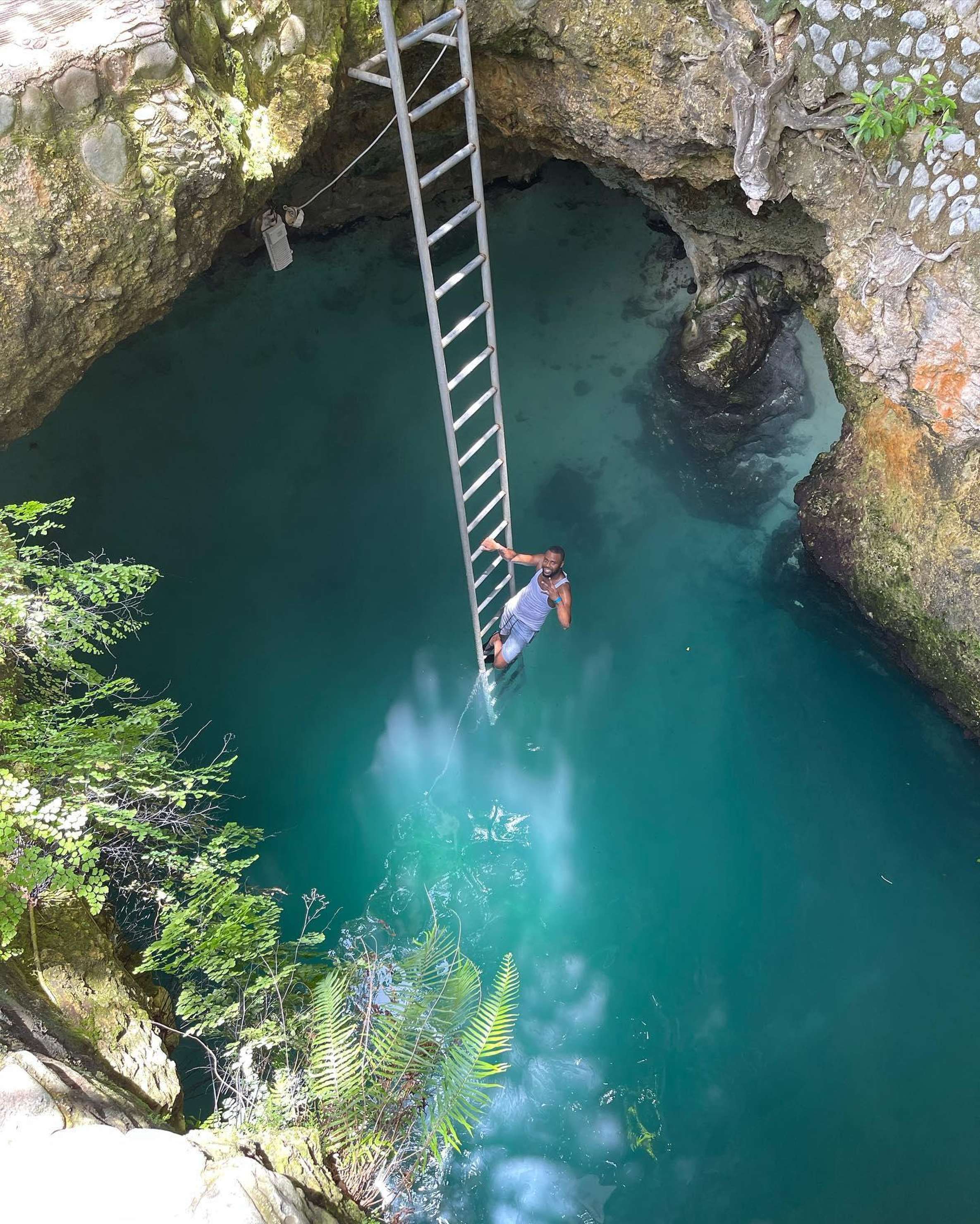
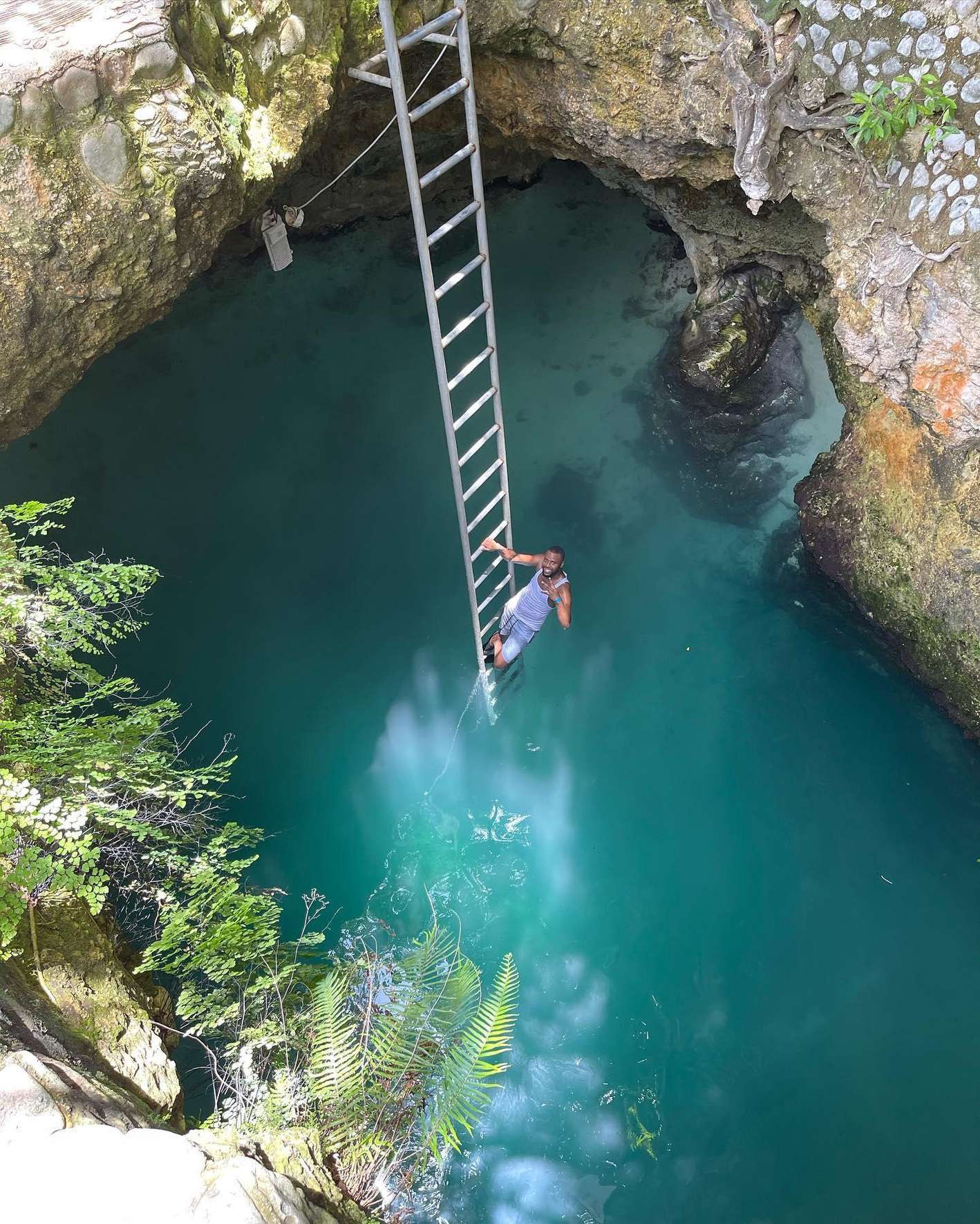
The Negril tour ends at a mineral spring swim, so wear your swimsuit under your clothes and pack a towel, dry clothes, and water shoes for the wet limestone around the entry ladder.
04
During the tourWhat is expected of you
1
Photos
The Chiang Mai licensed farm allows photography only in designated areas, and some grow rooms ask you to follow hygiene rules as you walk through. On Jamaican grounds with Rastafari hosts, ask before any photo and accept a no.
Cannabis Farm tours - Jamaica vs Thailand guide
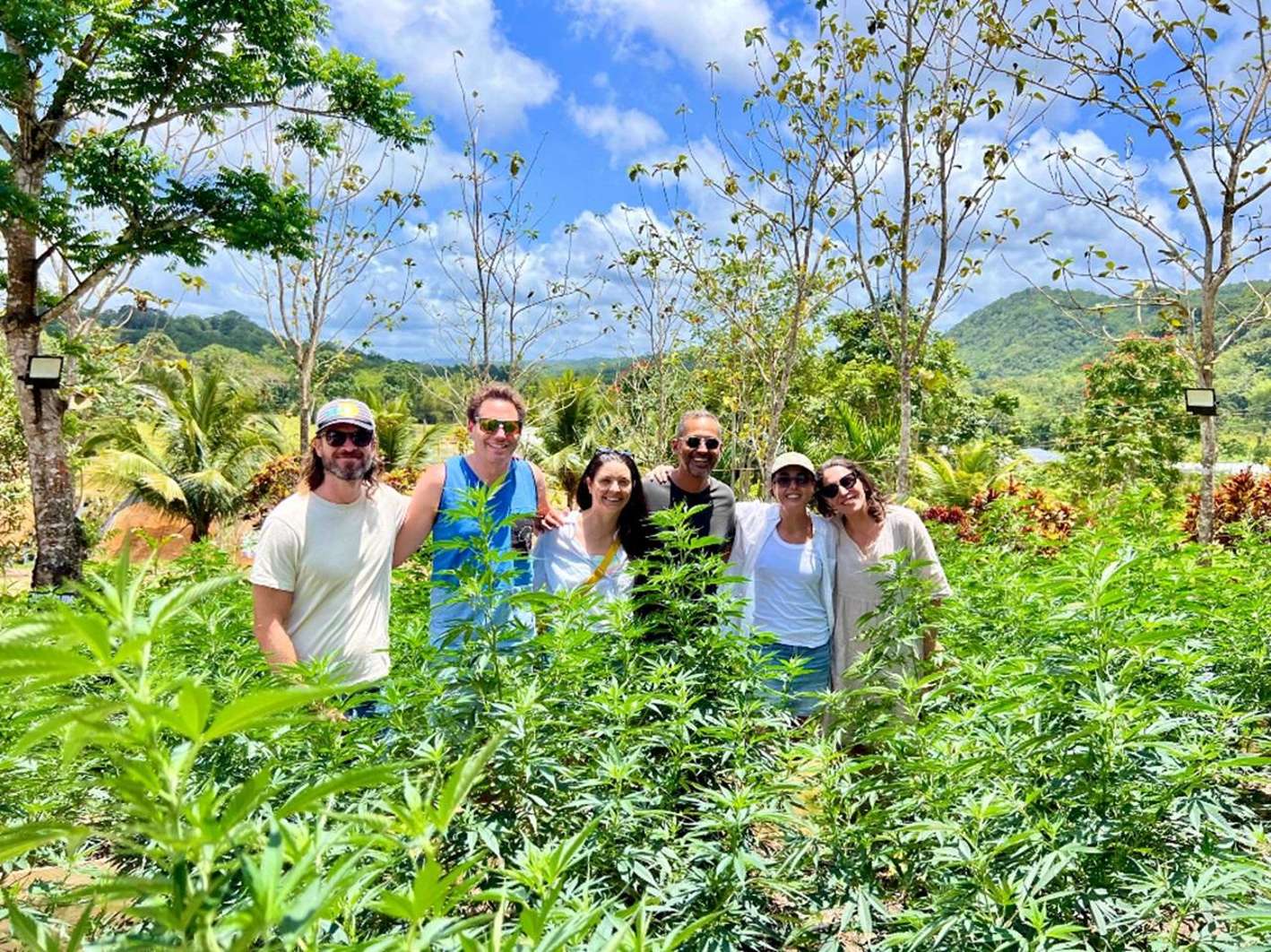
A farm visit in Jamaica means walking sun-grown hillside fields with Rastafari growers; in Thailand it means a licensed greenhouse walkthrough with no tasting at all. Both can earn a day of your holiday, and the difference lies in what each one asks of you.
Montego Bay· 18.81° N, 98.95° E
If you only remember three things
1
Book a morning slot: pickups between 8:30 am and 9:30 am walk the rows before the 33°C afternoon heat sets in.
2
Jamaica admits visitors from 18, Chiang Mai farms from 20, and neither lets children join.
3
Carry cash for rural Jamaican farm gates, where cards rarely work, and never try to fly home with any of the herb.
Is a cannabis farm tour worth a full day?
Blue Mountain coffee arrives first, then the walk. On a Jamaican farm visit you follow the plant from seed to harvest with the people who grow it, learn to roll a spliff the Rastafarian way, and sit down to a farm-to-table lunch.
Some visitors end the day smoking from a coconut chalice; others simply ask the growers questions until the light goes soft.
That second kind of visitor is worth dwelling on. Non-smokers get just as much from the tour, because the draw is cultivation methods, medicinal uses and Rastafarian culture, and none of it requires lighting anything. A farm is a working piece of agriculture, and the guide's job is to explain how it runs.
A traveler's note
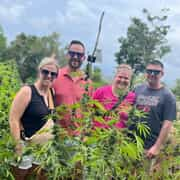
Fascinating tour about Rastafari culture. As a non-smoker I enjoyed learning how ganja is cultivated and its medicinal uses. Randy kept us entertained and took photos.
So what does a day of it cost you in return? A few hours on a hillside or in a greenhouse, and the sense that cannabis comes off a plant long before it reaches a packet. For most travelers who make the trip, that trade feels obvious once they are standing in the field.
Tour for this
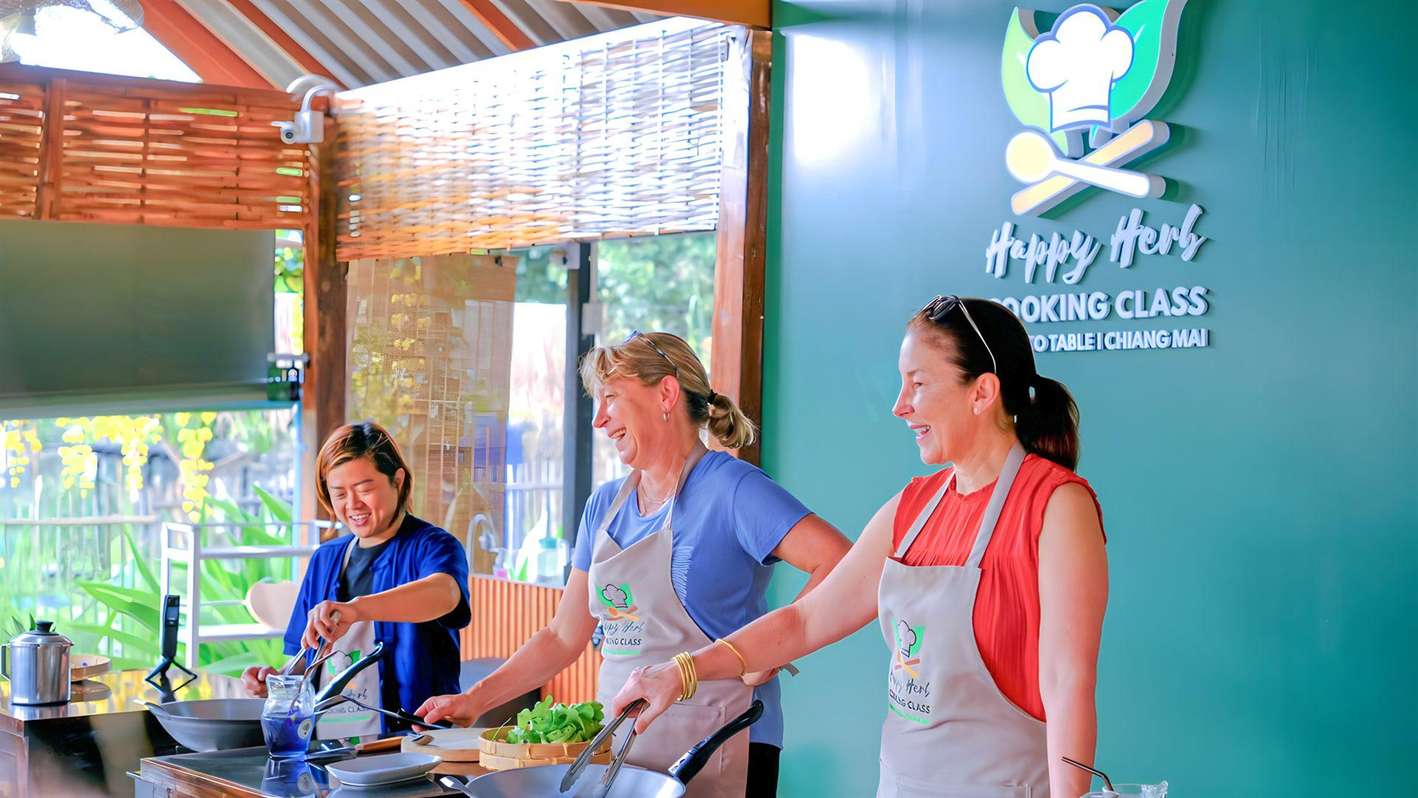
Chiang Mai: Happy Herb Cannabis Farm Guided Tour5.0★ (2) · 3 hours · Hotel pickup · Free cancellation
Jamaica grows its best herb outdoors, under tropical sun. The high-grade flower comes from rural hill parishes such as Westmoreland, known island-wide for top-quality ganja; the coastal commercial stops rarely grow it themselves.
Rastafari communities hold sacramental rights to cultivate ganja under the 2015 amendment to the Dangerous Drugs Act, and that tradition shapes how a Jamaican visit feels: ceremonial, cultural, often with a chalice involved.
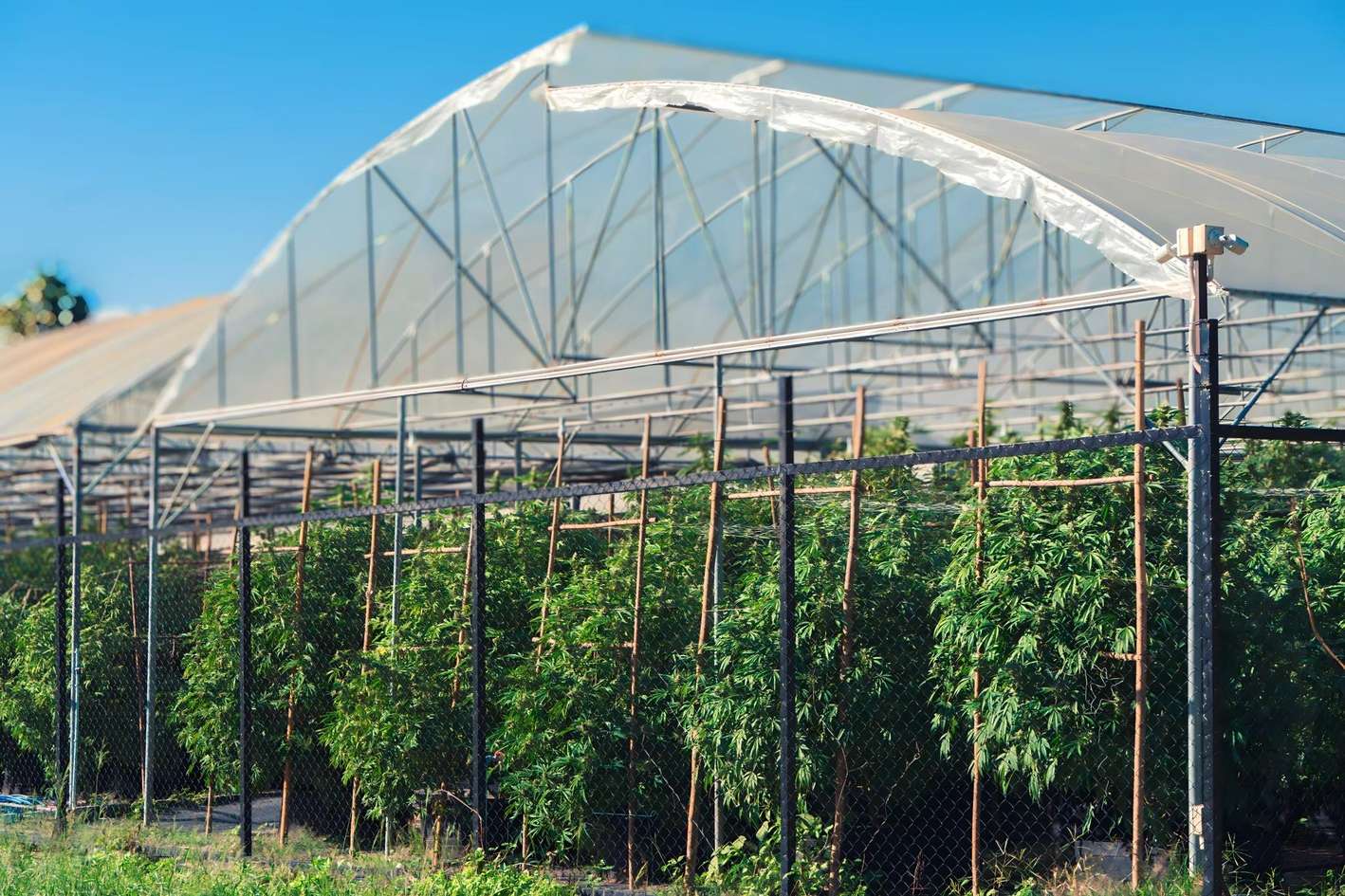
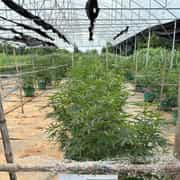
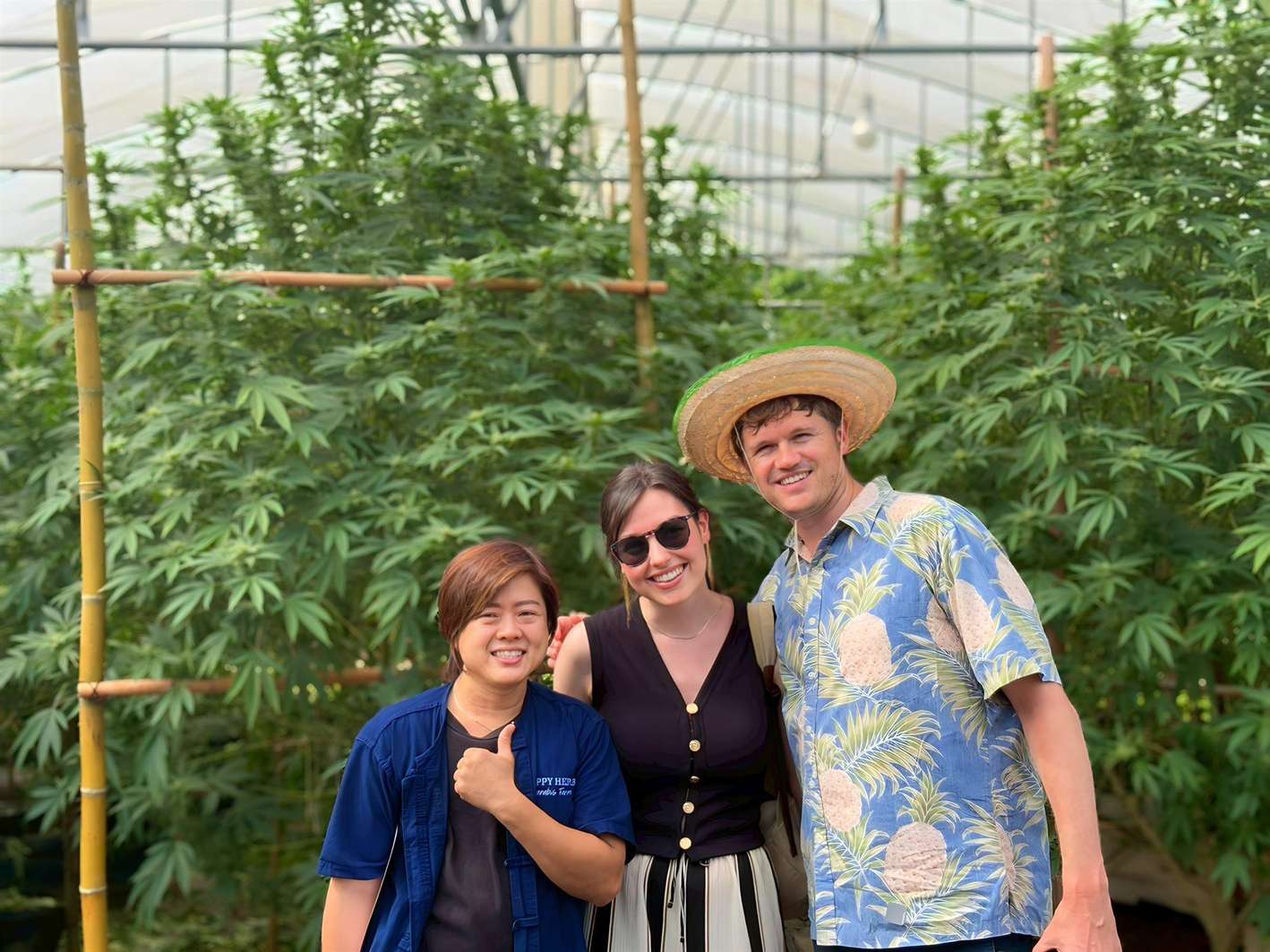
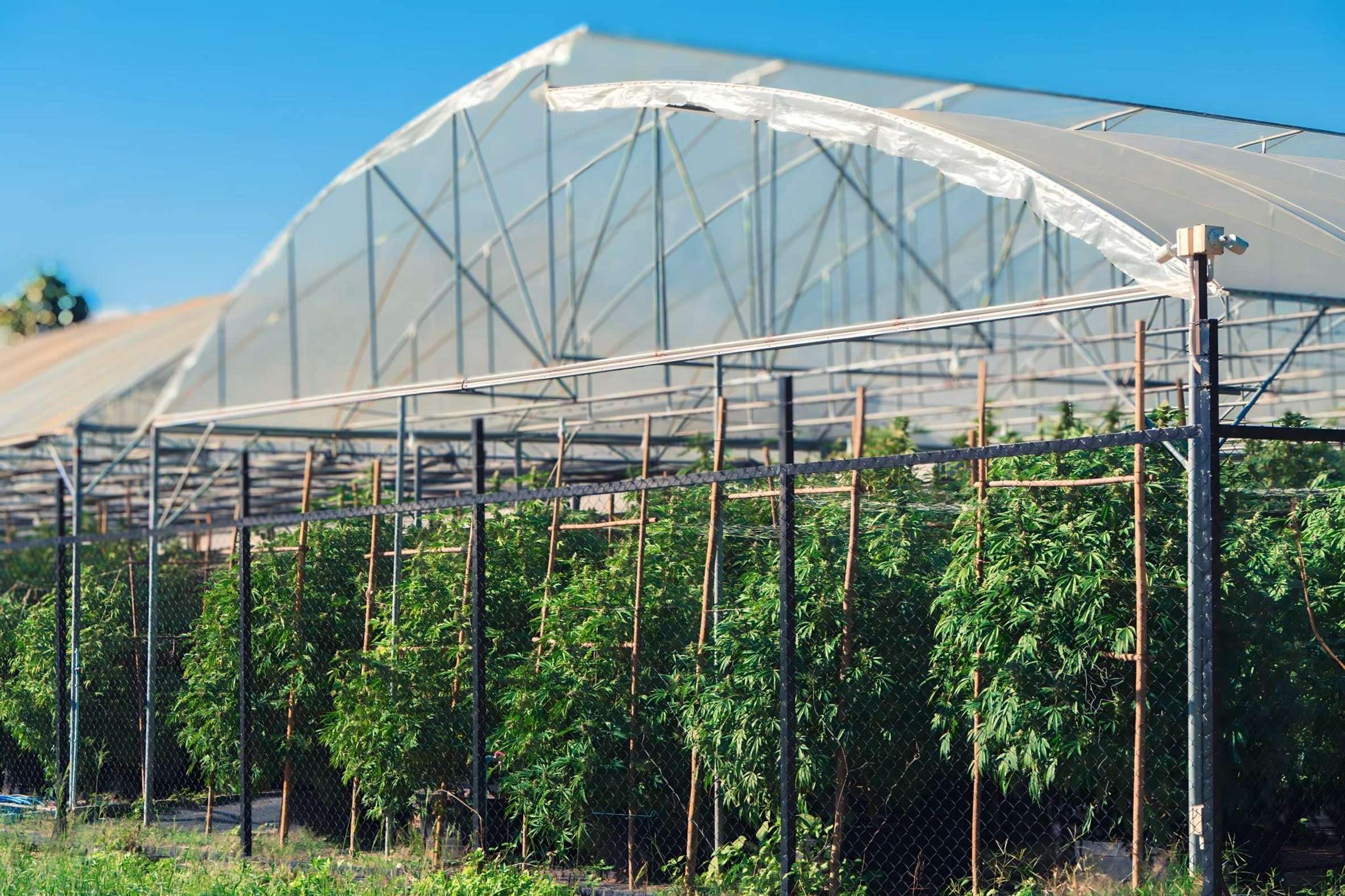
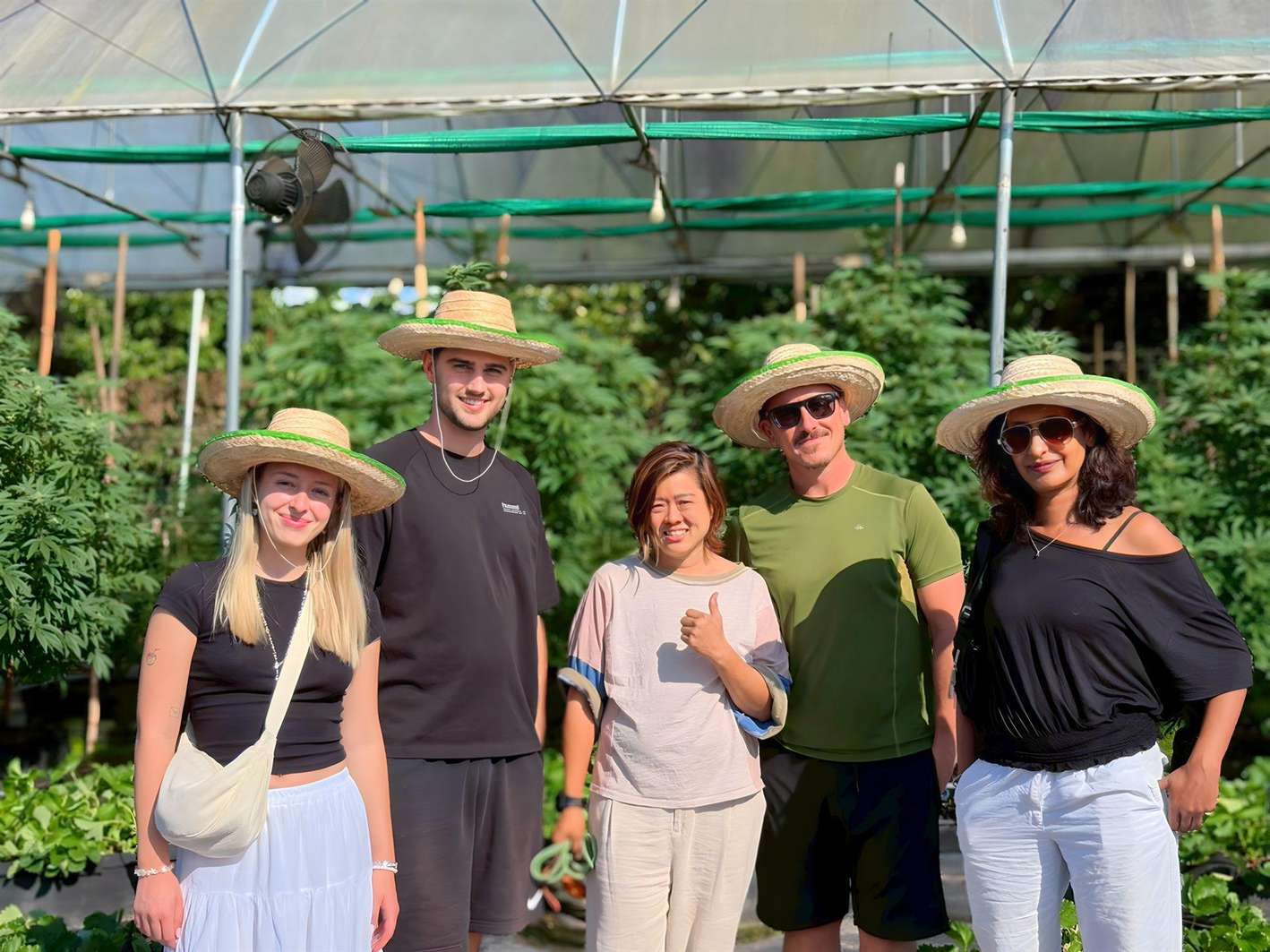
Chiang Mai runs a different machine. Licensed farms there follow Good Agricultural Practices standards: soil tested in accredited laboratories, pesticides stored in secure designated areas, integrated pest management to cut chemical use.
Tours are guided in English, walk directly through the growing facilities, and stay strictly educational. No consumption, sampling or distribution is permitted on a Chiang Mai farm tour, whatever you may have read elsewhere.
What people get wrong
MythA farm tour means smoking your way through it
Reality
In Thailand none is allowed, and in Jamaica plenty of visitors never light up at all.
MythEvery ganja farm is a licensed tourist attraction
Reality
Some Jamaican farms are licensed to grow but not to run tours, which is why booking through an established operator matters.
MythThai farms are open-air like Jamaica's
Reality
Licensed Chiang Mai farms grow in controlled greenhouses, nine-week cycles, year-round.
The choice comes down to this: culture and open sky, or regulation and glass. Both are honest agricultural visits.
A farm day has a shape. You arrive, someone hands you coffee or tea, and the guide leads you through the fields or grow rooms tracing the plant from seed to harvest.
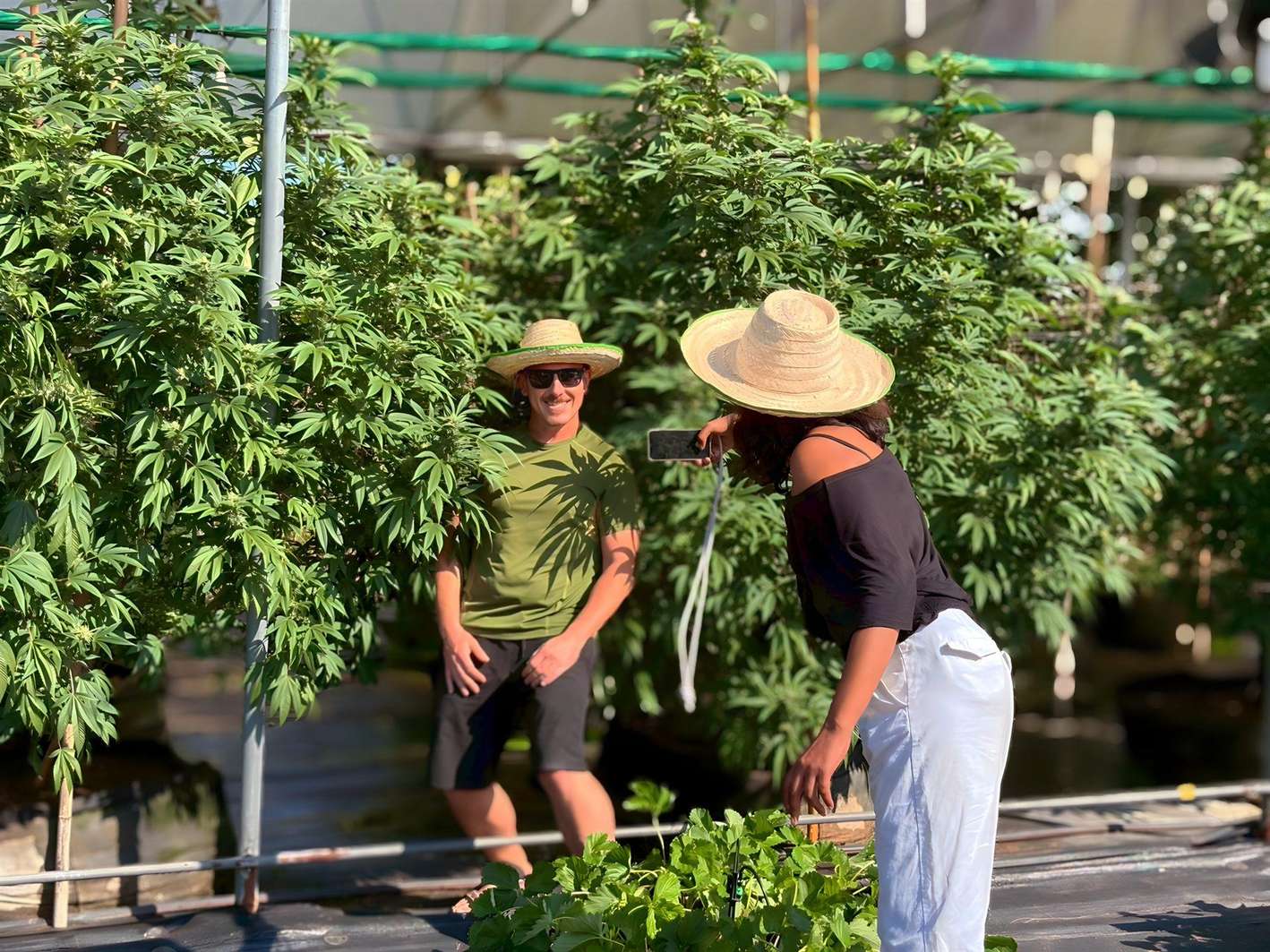
In Chiang Mai you walk straight through the indoor facilities, and before entering the cleaner rooms you change footwear at the entry station and put on the protective overcoat and cap they provide. The ritual exists because visitors carry in dust, hair and microbes that the flowers do not need.
Jamaica adds a second act. On the Montego Bay farm-and-bird-sanctuary tour, a private three-hour trip, you touch and smell the plants in the nursery, then share a weed chalice pipe at the end.
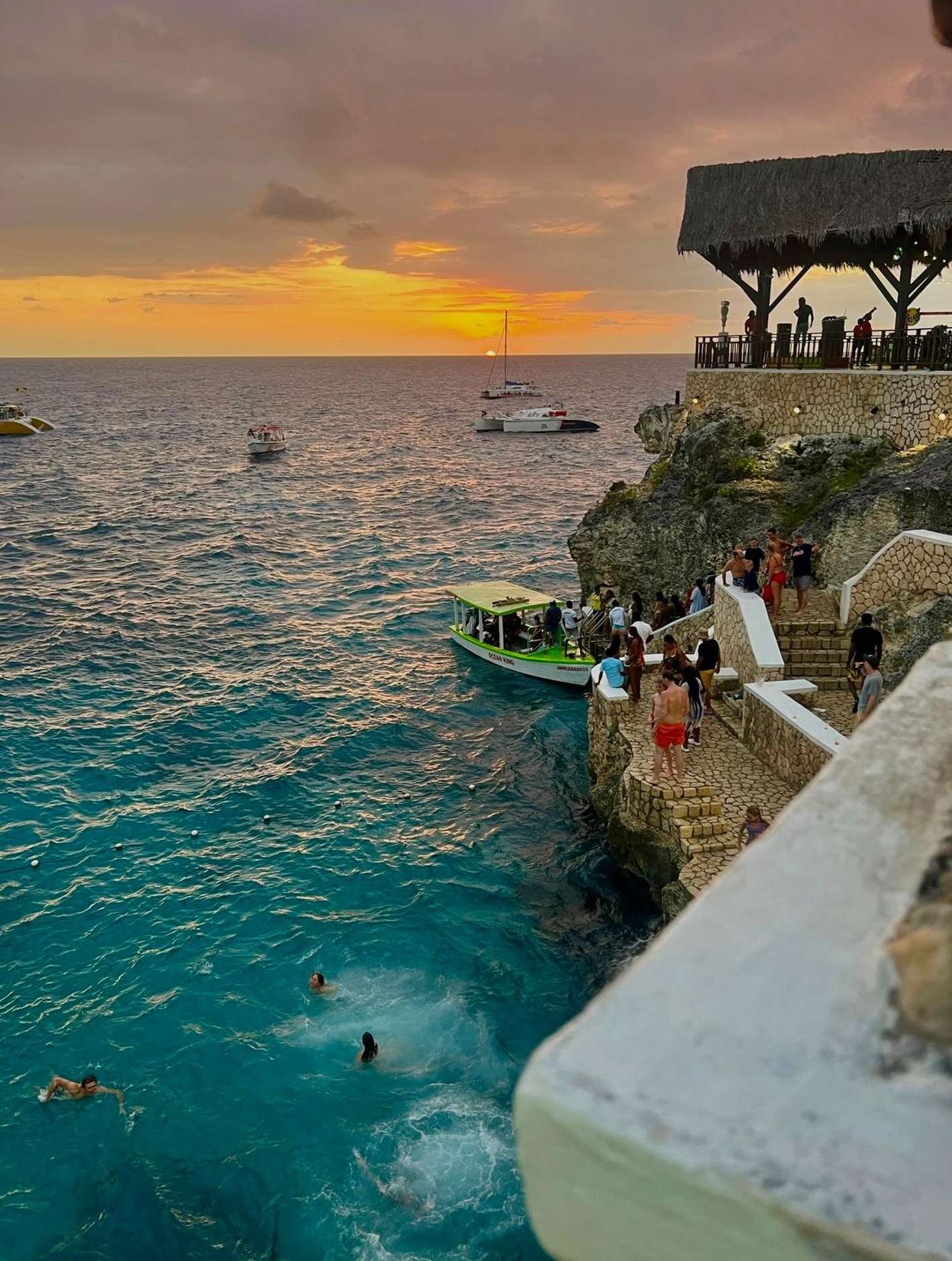
For something longer, the Negril Marijuana Farm Tour & Mineral Spring Swim stretches the same agricultural visit into a half-day, pairing the fields with a swim at the mineral spring and cliff jumping near Rick's Cafe.
What nobody tells you
Chalice etiquette
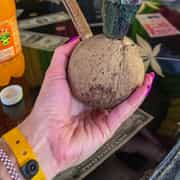
Three full pulls per person is the custom. Offer a blessing before you draw, wrap a hand around the mouthpiece, and wipe it before passing. The pipe moves counter-clockwise.
The chalice is stronger than it looks
Because the herb steams without directly burning, the full flavor and strength arrive at once. Start slow.
Photos have limits
On licensed Chiang Mai farms, photography is allowed only in designated areas. Ask before pointing a camera at anyone.
By the time you are back in the van, the day's shape will make sense.
Tour for this
Negril Marijuana Farm and Mineral Spring Tour4.8★ (18) · 5.5 - 6.5 hours · Hotel pickup · Free cancellation
Jamaica harvests almost whenever you show up. Hill growers stagger their planting under a near-equatorial sun, running three to four harvests a year, with the main outdoor season running September through November. December through March is the comfortable window for walking Westmoreland's fields, when dry days outnumber wet ones and daytime highs sit near 30°C.
Chiang Mai's greenhouses flower hardest from August through November, with September and late-November harvests, and the controlled nine-week cycles mean something is always at a stage worth seeing. The wet season keeps crops under cover, which is how they reach peak bloom at all.
Pick your month, then pick your hour, because hour matters more. Morning pickups between 8:30 am and 9:30 am are the slot to ask for: the fields and greenhouses sit at their coolest, and the light inside Chiang Mai's glasshouses is at its best before 11 am.
Afternoon rounds run into peak heat around 33°C, with heat indices near 37°C.
Whatever country you choose, take the early slot and let the afternoon do something else.
Tour for this
Negril: 7 Mile Beach, Weed Farm, and Rick's Cafe Tour5.0★ (2) · 8 hours · Hotel pickup · Free cancellation
Jamaica keeps things simple up to a line. Carrying two ounces or less of ganja is decriminalized: no arrest, no record, at most a ticket with a fixed penalty and 30 days to pay it.
Tourists can apply for a medical permit to legally buy and hold up to two ounces, issued by the Ministry of Health with a home prescription or a signed voluntary declaration.
Buying legally happens only at retailers licensed by the Cannabis Licensing Authority. Smoking in public, or within five meters of one, only earns a ticket, and an unpaid ticket ends up as a conviction, so keep your smoking on licensed ground.
Thailand drew a harder line on 23 June 2025, when cannabis flower became a controlled substance again. Tourists cannot buy, carry or use flower without a prescription issued in Thailand by an authorized practitioner, and even with one the supply is capped at 30 days for medical need.
Chiang Mai enforces the national rules with no carve-out for visitors. Smoking in public risks a fine of up to 25,000 baht and three months in prison.
The practical reading: on a Jamaican tour, consumption may be part of the experience on licensed ground. On a Thai tour, look and learn, and leave the plant where it grows.
Tour for this
Montego Bay: Marijuana Farm Private Tour with Transportation4.1★ (55) · 1 - 2 hours · Hotel pickup · Free cancellation
Neither country treats a cannabis farm as a family attraction, and the age gates are firm. Jamaica admits visitors from 18, the same minimum that applies to entering a licensed dispensary, and photo ID backs it up at the gate. Some Jamaican tour listings go further and bar anyone under 18 outright.
Thailand draws the line two years higher. Chiang Mai farm tours are adults only, aged 20 and over, and that applies to every format: the straightforward guided walk, the law-and-cultivation session, and the cooking-class combination. A teenager who promises not to touch anything does not change the answer.
What that leaves a family with depends on the day. The rafting, the mineral spring and the beach portions of Jamaican combo outings follow their own rules, so a split-day plan can still work: adults to the fields, everyone else to the water.
But the farm walk itself is grown-ups only in both countries, and there is no version of the booking that gets around it.
Tour for this
Montego Bay: Private Marijuana Farm Tour with Nursery Visit3.7★ (101) · 3 hours · Hotel pickup · Free cancellation
Getting there - tour shuttle, taxi or your own wheels
The roads decide this one before you do. Jamaica's interior mountain routes climb steeply, wind hard, sit in fog at elevation, and carry potholes and almost no street lighting.
Driving inland is slow work, and the advice for higher-risk areas is to move in groups and stick to registered taxis, skipping unofficial cars. A round-trip tour transfer removes all of that at once, which is why most farm visitors take one.
Chiang Mai's valley roads are better built. Route 1095 north of the city is a well-surfaced two-lane road with guardrails, though it earns its reputation from 762 bends, hairpins and blind crests, all unlit after dark.
Ride-hailing works across the city and outer districts like Mae Rim and San Sai, but Grab is effectively unavailable in rural districts, so a ride out does not guarantee a ride back.
How each way of getting there goes
Round-trip tour transferBooked with the tour, driver waits, no navigation required.
Easy
Chartered taxi or hotel-arranged carPricier, but the driver stays yours for the day.
Easy
Songthaew plus last-mile hireShared trucks stop on main roads only, so budget a private hire for the final stretch.
Moderate
Scooter or rental carFine on Chiang Mai's surfaced routes in daylight; Jamaica's mountain roads are a different proposition.
Difficult
No smoking in the vehicle in either country. Transport counts as a workplace, and public consumption bans apply along every road between you and the farm.
Driving yourself
Rent a car for the driveCompare cars from the rental companies in one search, then pick yours.
The ground sets the dress code. Jamaican hill farms sit on red bauxite soil that stains white clothes permanently with rust-colored mud, so wear older, darker gear, long breathable trousers, and closed shoes with real grip.
Flip-flops and your good sneakers stay home. Toss a spare pair of shoes and clothes in the bag for the ride back.
Thailand adds its own layers. Bio-secure greenhouses make you change footwear at the entry station and wear the provided overcoat and cap, so your job is simply shoes that slip off and on.
On open farm ground, irrigation keeps the paths wet and slick; closed shoes again, plus a wide-brimmed hat, sunscreen and bug spray. If your Jamaican day includes the Blue Hole mineral spring, wear the swimsuit under your clothes and pack water shoes for the wet limestone.
Money and paper matter as much as footwear. Rural Jamaican farm operations rarely take cards, so carry physical cash, US dollars accepted around Montego Bay and Jamaican dollars for better rates on small purchases.
Chiang Mai farms may ask for photo ID on arrival from adults 20 and over, so the passport or a copy rides in your day bag, not the hotel safe.
Two listings can look identical and deliver different days, so read the inclusions before anything else. Some bookings cover transport only, with farm entry fees paid separately at the gate; others fold the entrance in. On the Montego Bay private farm-and-bird-sanctuary trip, entry fees are the guest's own, payable on arrival.
On Thai tours, the bigger surprise runs the other way: no cannabis products appear in the price at all, and none are permitted on the visit, so a listing promising samples is not describing Chiang Mai.
Alcohol never travels with these tours either. It is explicitly not allowed on Chiang Mai farm visits and not included on the cooking-class day.
How to choose a cannabis farm tour
Check
Why it matters
Our pick
What's included vs billed on arrival
A transport-only booking can double at the gate
The Chiang Mai farm-and-cooking-class tour includes transfers, entry and the class in one booking.
Consumption policy
Decides whether the day is agricultural or includes sampling
Educational only, with no consumption, sampling or distribution permitted.
Age rules
Under-20s are barred outright in Thailand, under-18s in Jamaica
Adults 20 and over, with photo ID possibly requested on arrival.
Transfer quality
Rural pickup and the return ride are the failure points
Round-trip hotel transfer within Chiang Mai city is included.
Weather fallback
Mountain roads can close a farm for the day
Free cancellation up to 24 hours before start time.
Run any listing through those five checks and the differences show up fast.
Rain, storms and changed plans - what happens then
Tropical weather rewrites schedules, and the operators know it. On Jamaican hill farms, heavy storms turn unpaved mountain roads muddy or wash them out entirely, and when access becomes unsafe the operator cancels without penalty and reschedules to a date that suits you both.
The same applies to the commercial farm tours in the St. Ann hills. Hurricane season runs June through November, peaking August to October, so a mobile number and a flexible morning help.
Chiang Mai's version is gentler. Monsoon downpours, heaviest in August and September, arrive as intense bursts lasting half an hour to two hours in the mid-to-late afternoon, then clear. Cooking classes carry on regardless, held under covered, semi-open-air kitchen pavilions.
A dry day closing the bars does not close the farms: tours run on the five major Buddhist holy days and through election periods, though an individual farm may adjust its hours.
When plans change
If this happens
What happens then
Severe weather makes farm access unsafe
The operator cancels without penalty and reschedules to a mutually convenient date.
Afternoon monsoon burst in Chiang Mai
It passes within 30 minutes to two hours; the covered kitchen pavilion keeps the cooking class going.
You cancel ahead of time
Free cancellation up to 24 hours before the start time on the featured tours.
Entry fees not in the booking
Pay at the gate on arrival, in cash.
Book with a fallback in mind and the rain becomes a detail instead of a ruined day.
Everything you see on the farm stays on the farm's side of the border, and this is the one rule with real teeth.
Carrying cannabis or cannabis products out of Thailand can bring up to 10 years in prison under the Customs Act, plus a fine of up to four times the value of the goods and confiscation.
Plant material without permission carries its own penalty, and extracts over 0.2% THC count as narcotics trafficking, with sentences from one to 15 years. Jamaica is just as absolute: exporting ganja, or preparing to, is a punishable offense, and no home-state prescription protects you at an international gate.
Seeds and clones fall under the same ban in both countries, however harmless the little packet in a gift shop looks.
The line you cannot cross
Flying out with cannabis from Thailand Up to 10 years in prison, fines up to four times the goods' value, and confiscation; exporting ganja from Jamaica is equally illegal.
There is a legal way to have herb in Jamaica, though. Licensed herb houses deliver flower, pre-rolls and edibles to your hotel with proof of accommodation, medical authorization and photo ID, and non-residents may hold up to two ounces with a permit or signed declaration.
Check your resort's policy first: many resorts ban cannabis entirely on the premises. Enjoy it there, or not at all, and fly home with photos instead.
Jamaica builds combo days around its farm visits better than anywhere. In Negril, a cannabis farm shares its ground with the Blue Hole Mineral Spring, so the grow tour and a swim in the spring-pumped pool happen on one stop.
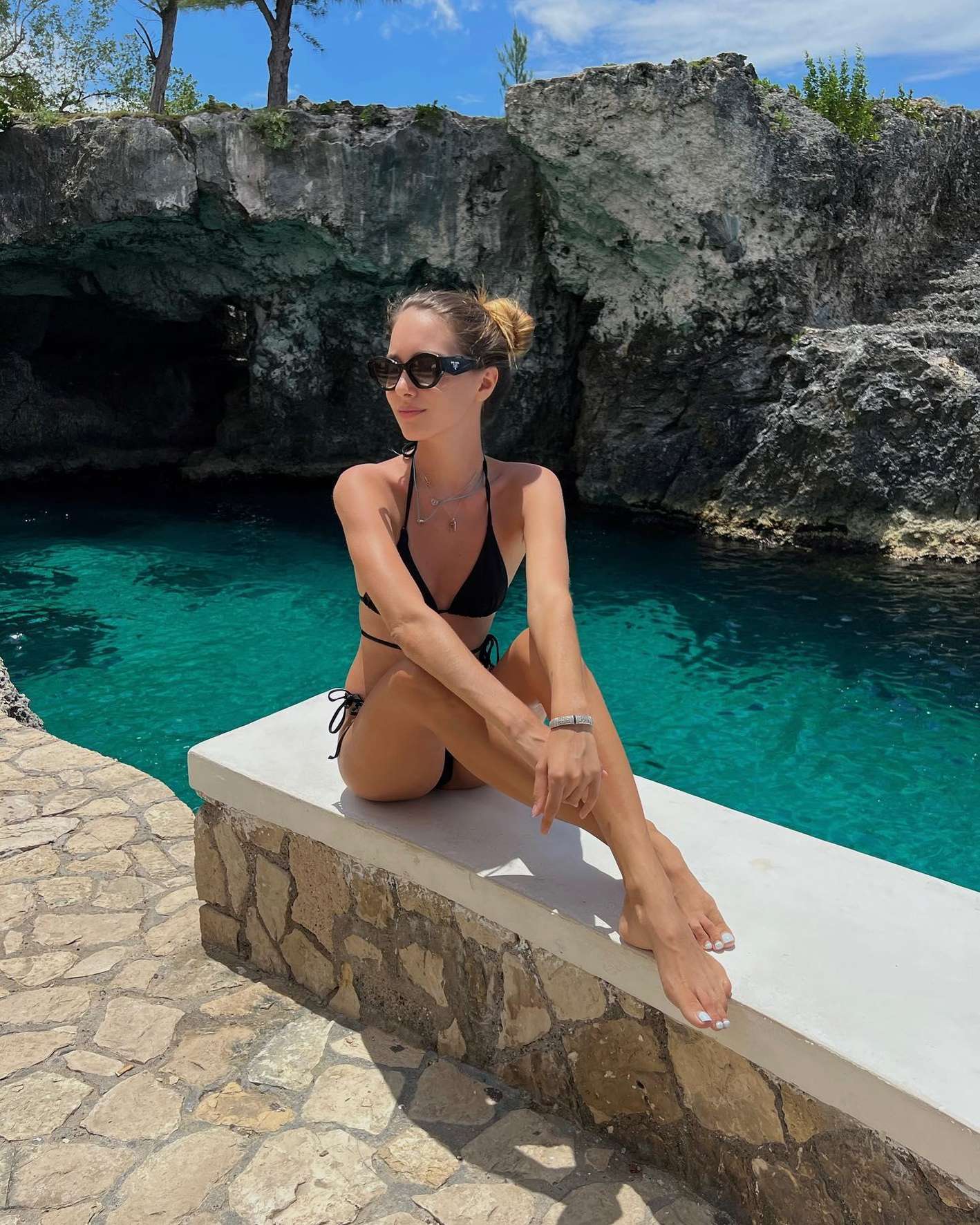
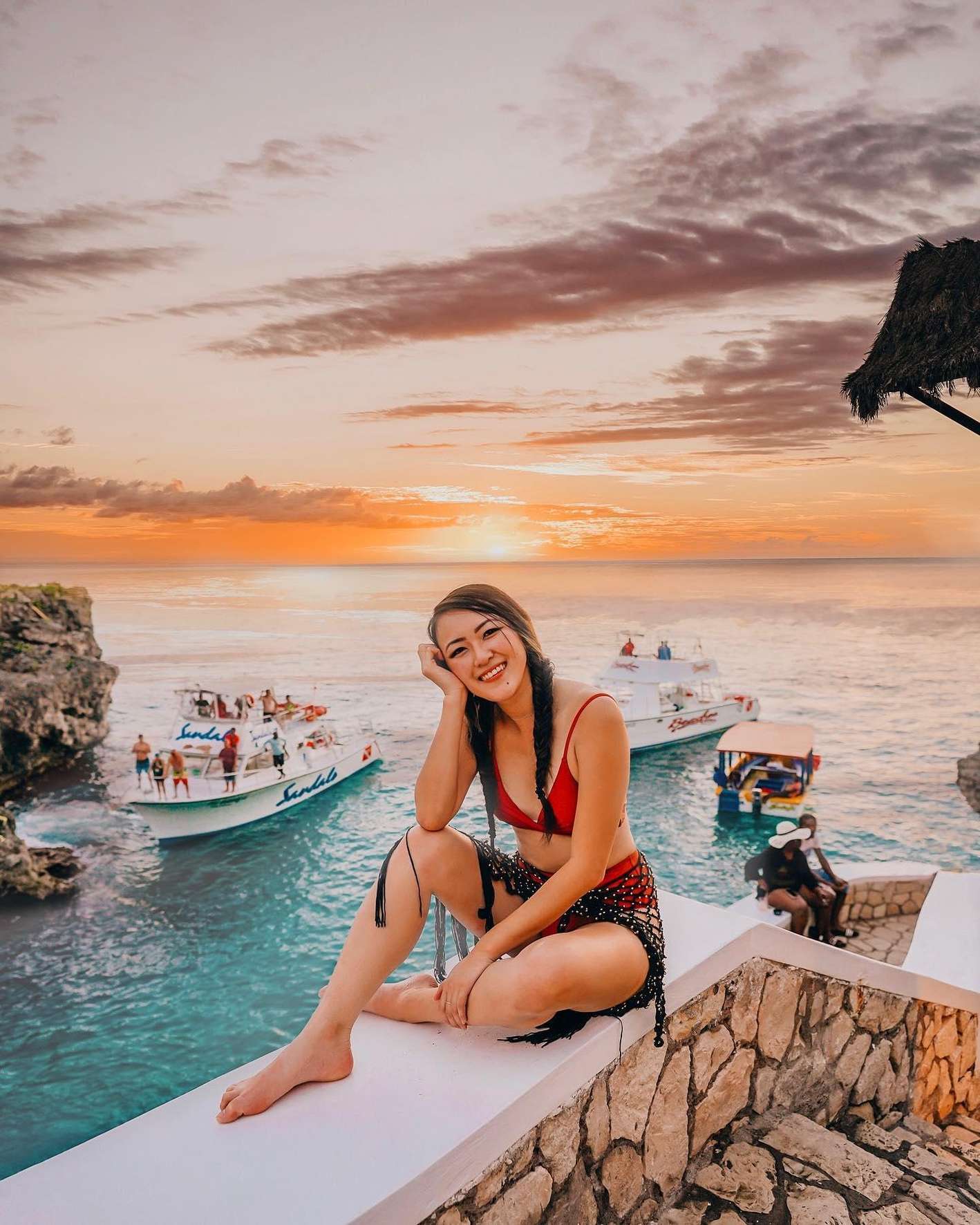
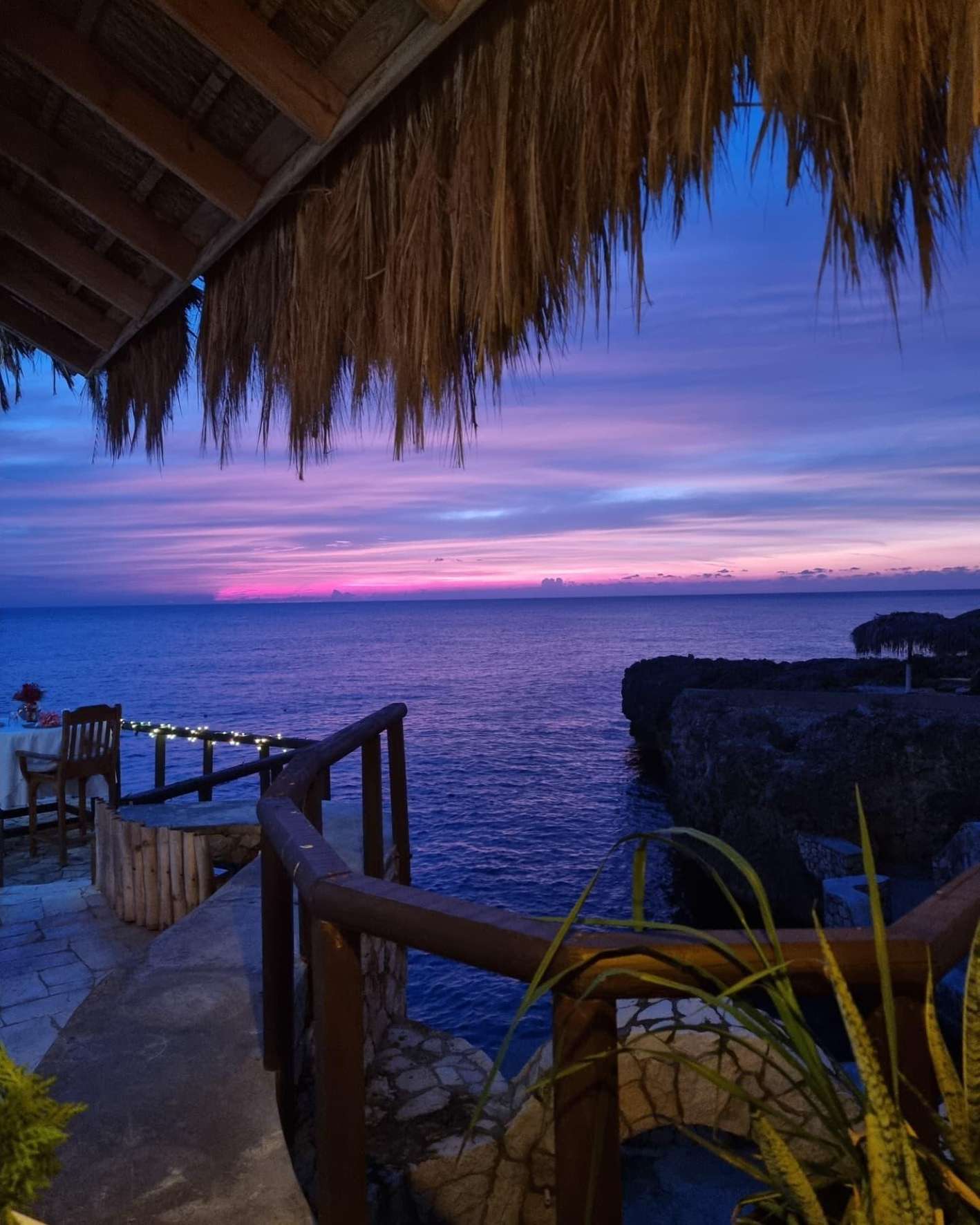
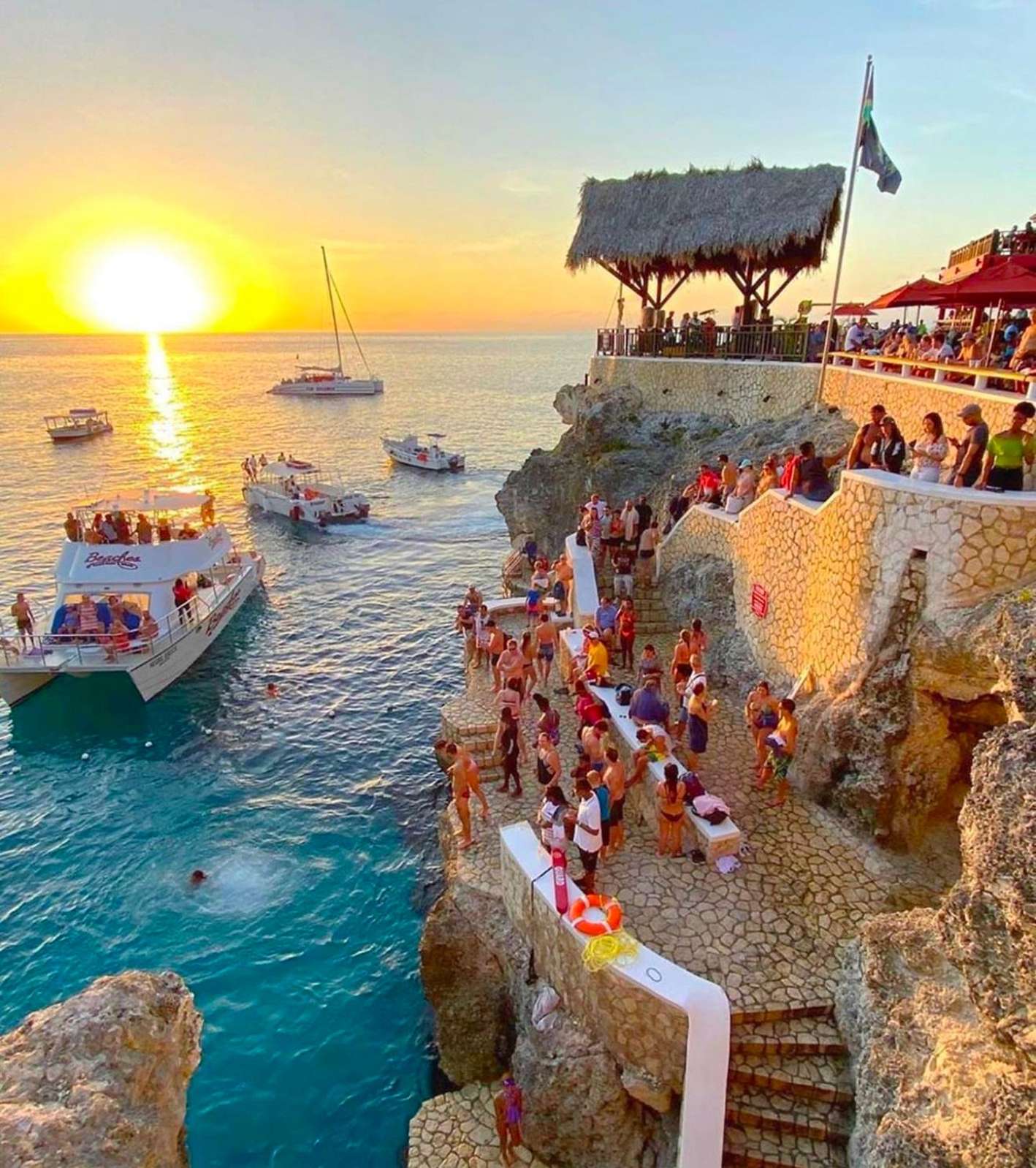
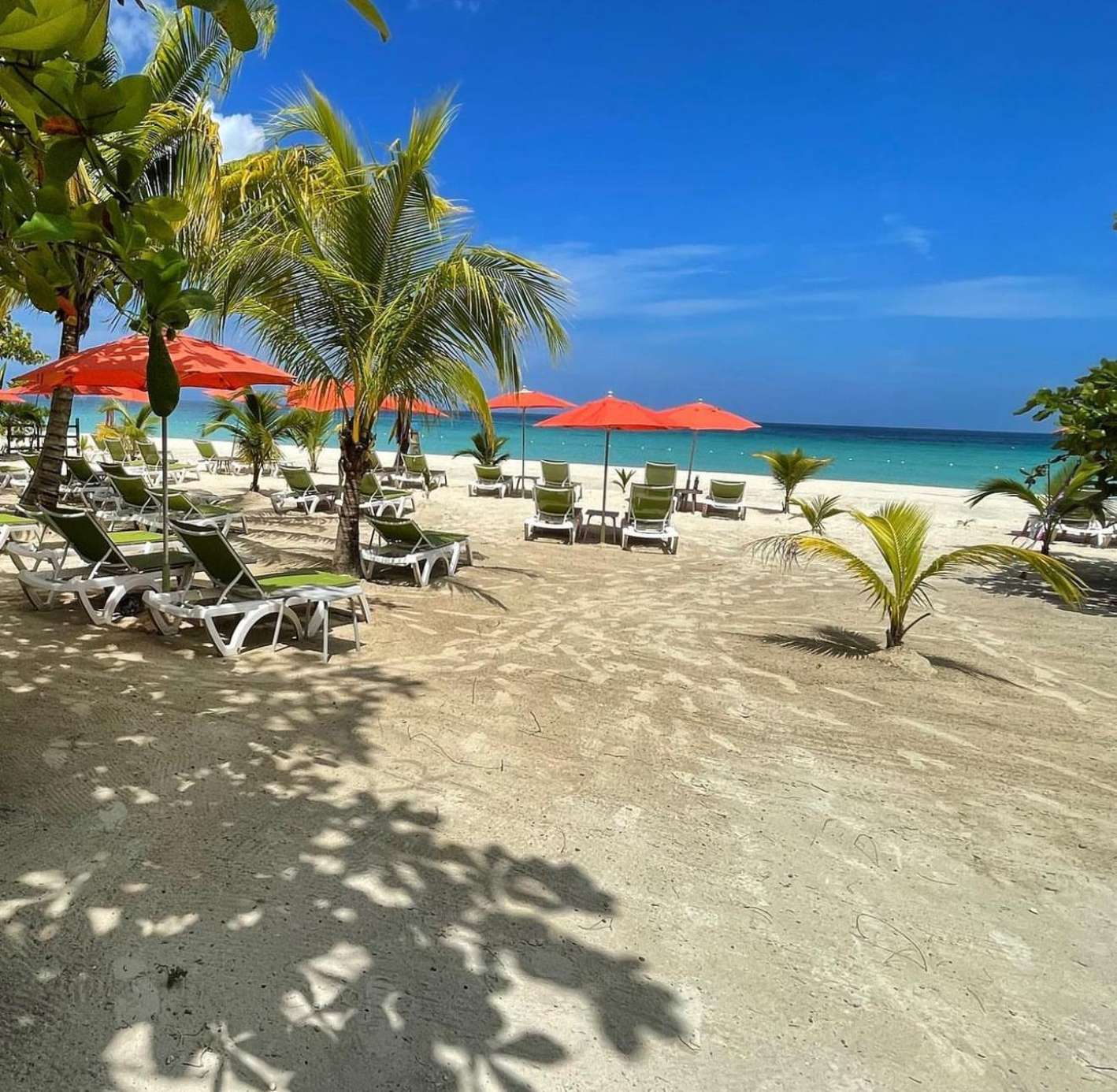
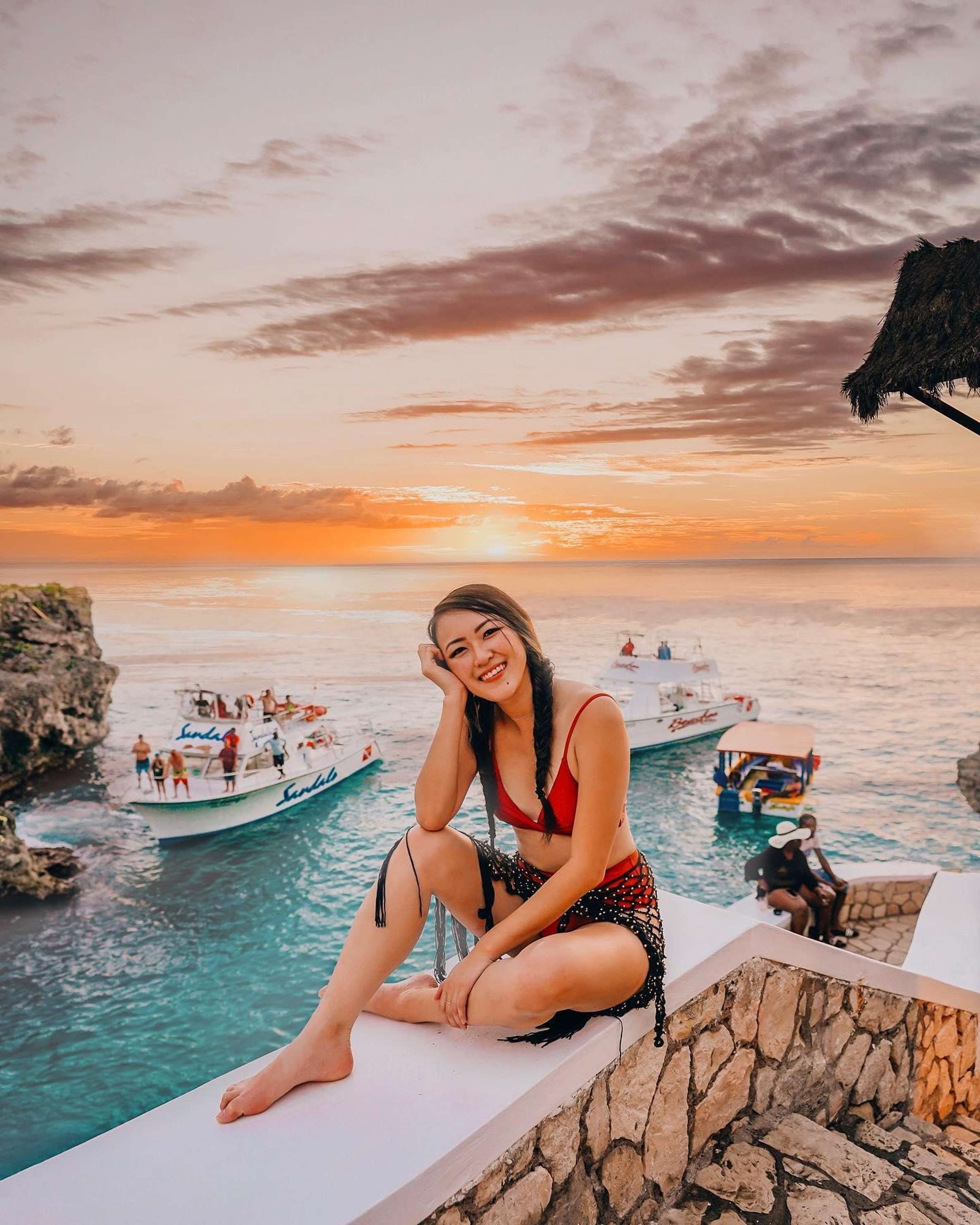
Add the West End cliffs and Rick's Cafe, or 7 Mile Beach, and the farm becomes one scene in a full island day.
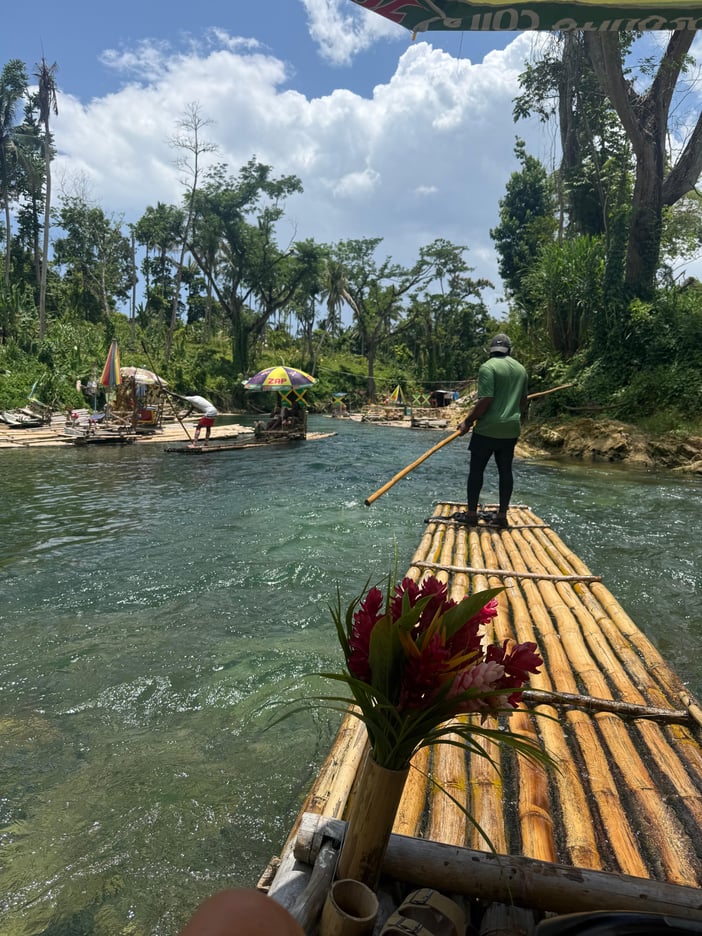
Inland, bamboo rafting on the Lethe River and a limestone foot massage slot neatly after a Montego Bay farm visit, and ATV trails or a float down the Roaring River round out the adventurous versions.
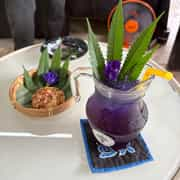
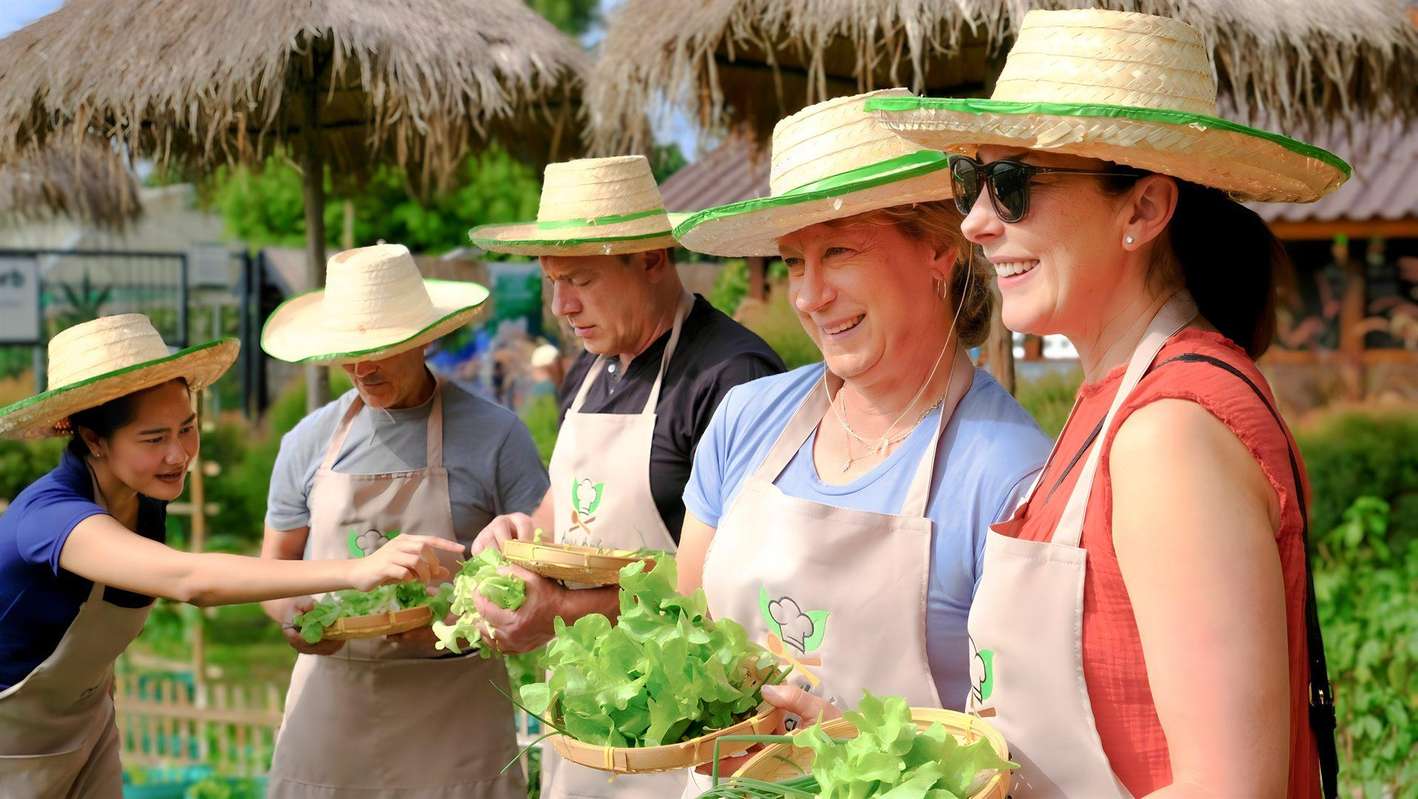
Chiang Mai's pairing is quieter and closer to the kitchen. The farm-and-cooking-class day already carries the pairing inside it: a morning at the greenhouses, then four Thai dishes cooked at your own station and a shared garden meal.
Around the farm district itself, a small cluster of sights sits within a few minutes' walk, including an animal zone and a panda research center, with museums and temples worth the drive once you are back toward the city.
Whichever country you pick, the pattern holds: let the farm anchor the morning and give the afternoon to water, food or coast, and the day earns its place in the itinerary twice over.
Pick Jamaica for open-air fields, Rastafari tradition and a chalice at the end; pick Chiang Mai for licensed greenhouses, an English-guided educational walk and a cooking class. Whichever it is, take the morning slot, carry cash in Jamaica, and leave the herb where it grows.
Go ifGo if you want to see the plant as agriculture, with growers who will answer anything.Go if your group is all adults: 18 and over in Jamaica, 20 and over in Thailand.Go if a morning is free, because the early slot beats both heat and humidity.
Skip ifSkip it if anyone in your party is under 18 in Jamaica or under 20 in Thailand.Skip it if you were hoping to sample or buy flower in Chiang Mai; none is permitted or included.Skip the independent drive if you are not comfortable on winding, unlit mountain roads.
Our pick to book
Montego Bay: Marijuana Farm Private Tour with Transportation4.1★ (55) · 1 - 2 hours · Hotel pickup · Free cancellation
The things people ask before booking a farm visit in Jamaica or Thailand.
Montego Bay2026
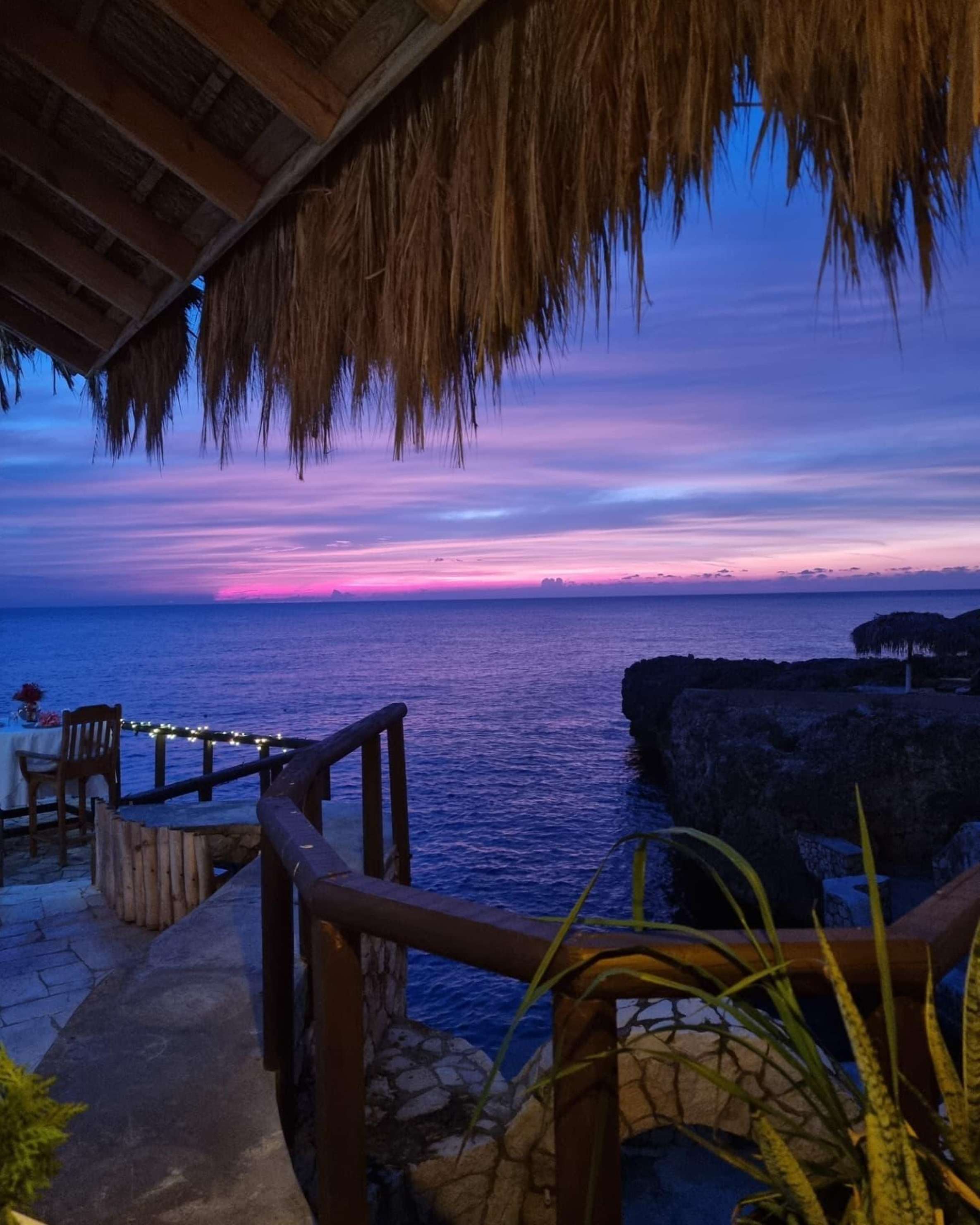
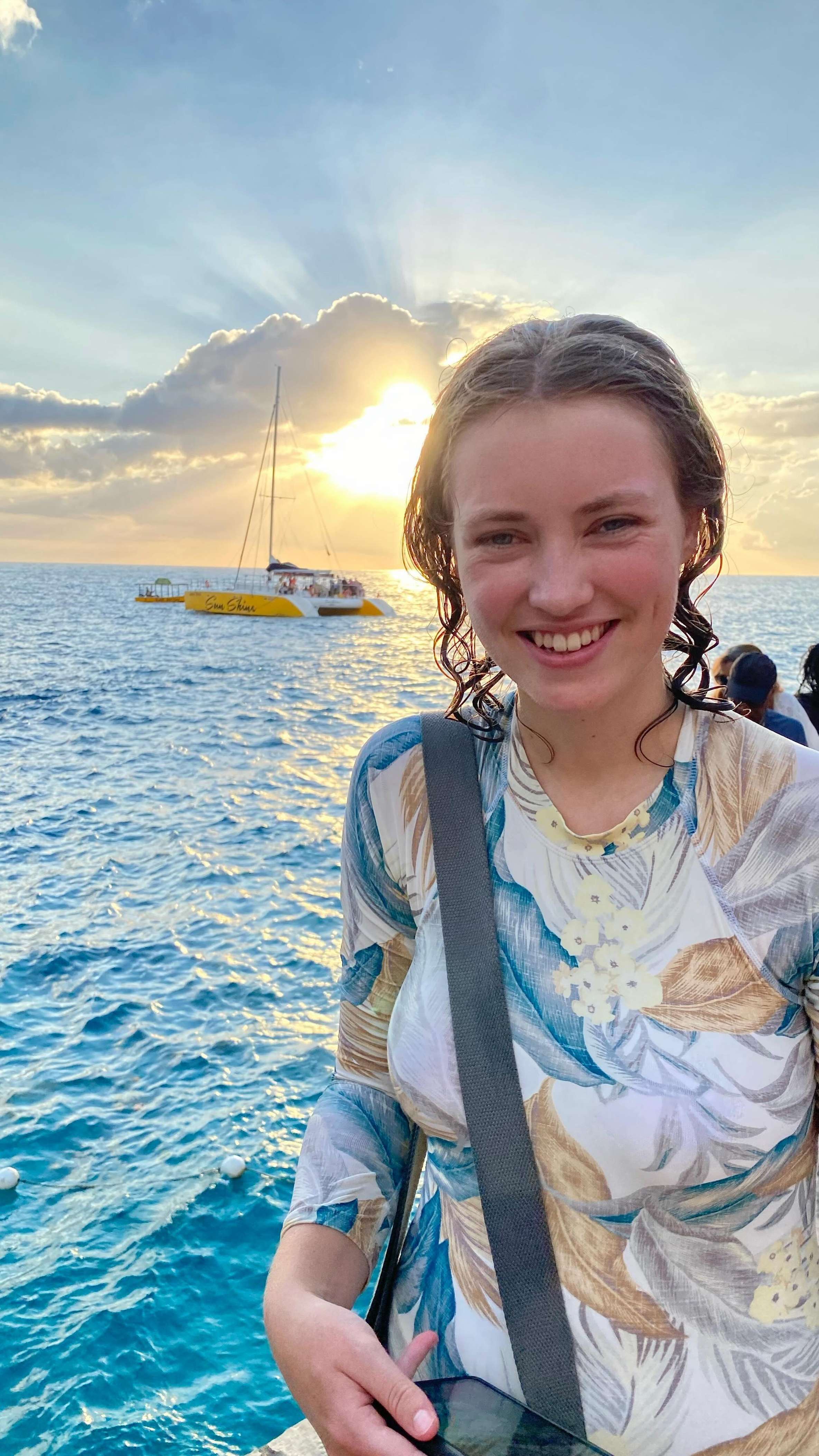
Sun on the rows, a grower explaining the harvest, and warm limestone under your feet after the river. Book the morning slot and bring old shoes.
What actually happens on a weed farm tour?
A guide walks you through the growing areas and traces the plant from seed to harvest. On Jamaican farms you meet the growers, ask questions, and on some tours sample herb or smoke from a traditional coconut chalice. Chiang Mai tours are strictly educational, with no sampling at all.
Can non-smokers enjoy a cannabis farm tour?
Yes. The tours work as agricultural and cultural visits, covering cultivation methods, medicinal uses, and on Jamaican farms the place of herb in Rastafarian life. In Chiang Mai no consumption happens on any tour, so nobody is ever asked to partake.
How old do you have to be to visit a cannabis farm?
Jamaica sets the minimum age at 18, and farms check valid photo ID at the gate. In Thailand the minimum is 20, and the Chiang Mai tours are restricted to adults 20 and over.
Can I bring my teenagers or children along?
Not on these tours. Jamaican farm visits admit adults 18 and over, and the Chiang Mai farm and cooking class day is restricted to adults 20 and older, even for family members who would not consume anything.
Is it legal to buy weed during a farm tour in Jamaica?
Yes, with the right paperwork. Non-residents can get a medical permit from the Ministry of Health to buy and hold up to two ounces at a time, using a prescription from home, an on-site consultation, or a signed declaration. Licensed herb houses sell flower, pre-rolls, edibles, and concentrates.
Can I buy cannabis flower directly from a Thai farm?
Not as a tourist. Thai law requires a prescription issued in Thailand by a licensed practitioner before anyone can buy cannabis flower, and tours in Chiang Mai include no products in the price. The visit stays educational.
Can I bring cannabis home from Jamaica or Thailand?
No. Exporting cannabis in any form is illegal in both countries, and seeds or plant parts cannot cross the border either way. Thai customs penalties for smuggling cannabis out reach up to 10 years in prison, and a prescription from home gives you no protection abroad.
Where can I smoke after the tour?
In Jamaica, only in private places such as a residence that allows it, at registered Rastafarian places of worship, or at venues licensed for medical smoking.
Public spots and anywhere within five meters of one are off limits, and police can ticket smokers. In Thailand, public smoking can bring a fine and a short jail term.
Should I carry cash to a Jamaican farm?
Yes. Small hill farms in parishes like Westmoreland rarely take cards or digital payments for direct purchases. US dollars are widely accepted around Montego Bay, though Jamaican dollars often get better rates on small buys.
What should I wear for a farm walk?
Closed-toe shoes with solid grip, because field ground is uneven, wet, and slippery. Wear older, darker clothes and long trousers, since Jamaican hill soil leaves stubborn red stains and farm soil marks white garments. A hat, sunscreen, and bug spray cover the sun and the insects.
Do farm tour bookings include the entrance fee?
Some tours include entry fees in the booking and others leave them out, so check the inclusions list before you pay. On one Montego Bay combination tour, for example, farm and bird sanctuary entry fees are paid on site.
What can I pair a farm visit with?
In Jamaica the popular pairings are bamboo rafting on the Lethe River with a limestone foot massage, a swim at Blue Hole Mineral Spring, 7 Mile Beach and Rick's Cafe in Negril, or a bird sanctuary stop. In Chiang Mai, one full-day tour adds a hands-on Thai cooking class with lunch.
Your private day touring a weed farm from Montego Bay
See the plants from seedling to harvest with hotel pickup and a guide who knows the history, and cancel free up to 24 hours ahead.



 Your best match